
In the past, vitamin B was once considered a single substance. We now know it comprises multiple distinct vitamins, commonly called the B-complex. These vitamins occur in fruits and vegetables like bananas, broccoli, and spinach, as well as in legumes such as lentils or beans.
We depend on sufficient intake of B vitamins and should never neglect them. Individuals on a vegan diet, for example, need to pay special attention to consuming enough vitamin B6 and vitamin B12. Yet, which B vitamins are important? Among the most significant are thiamin, niacin, and riboflavin. Pyridoxine (vitamin B6) and pantothenic acid also play key roles in human nutrition and health.
Vitamin B1 (Thiamin): Crucial for the Body
Vitamin B1, also known as thiamin, is one of the best-known vitamins in the B-complex. It is frequently found to be deficient in adults, primarily because our bodies cannot store large amounts of it. Therefore, an adequate supply of vitamin B1 is essential.
As a water-soluble vitamin (as opposed to fat-soluble vitamins A, D, E, and K), thiamin is also sensitive to heat and can be destroyed by alkaline substances like soda. Ideally, it should be stored in a dry or acidic environment. Although vitamins such as B6 and B12 are vital as well, thiamin stands out for its major impact on our well-being, vitality, and overall health.
Deficiency and Nervous System Function
Vitamin B1 is particularly important for healthy nervous system function, crucial in coordinating nerves and muscles. It also plays an essential role in regenerating and metabolizing various neurotransmitters. As a result, vitamin B1 can help support the nervous system after illness or trauma. Given its strong influence, a deficiency can affect mental health. It is also very important for carbohydrate metabolism and converting food into energy—another reason it is among the most important B vitamins.
This vitamin’s influence on the nervous system can even have a calming effect on highly anxious individuals, easing nervous tension and emotional fluctuations if taken in higher doses. The minimal daily requirement is 1 mg, though the optimum may be closer to or beyond 2 mg. A severe vitamin B1 deficiency often occurs in individuals with alcoholism or in those with an unbalanced, unhealthy diet.
Signs and symptoms of a thiamin deficiency vary. It primarily affects the gastrointestinal tract, the peripheral nervous system, and the cardiovascular system. Early on, deficiencies progress slowly, with vague initial symptoms. Loss of appetite is a hallmark sign and usually the first to appear. Patients often report burning sensations, numbness, mild fatigue, and weakness in their legs.[1]

Vitamin B3 (Niacin): Essential for Concentration and Nerves
Niacin, also known as vitamin B3, is a water-soluble vitamin in the B-complex. It is a critical component of coenzymes involved in energy metabolism. The body can produce a small amount of vitamin B3 itself in the liver, from the amino acid tryptophan, yet most niacin must be obtained from dietary sources.
Niacin is found in all living cells, especially in the liver, adipose tissue, and kidneys. Because it is part of key coenzymes, niacin is engaged in numerous processes throughout virtually every cell—such as cell division. Niacin also supports immune system function.
Neurotransmitters and ATP
Another significant aspect of niacin is its role in forming neurotransmitters in the brain, which transmit information between nerve cells. It’s also involved in ATP metabolism and helps regulate energy production in the mitochondria, as well as blood sugar utilization. By supporting mental functions and the nervous system, niacin can reduce tiredness and fatigue. It’s therefore among the B vitamins that are especially important for the body.
Niacin is found in foods such as brewer’s yeast, peanuts, legumes, liver, poultry, fish, lean meats, and coffee. It is considered a concentration-enhancing vitamin and, in higher doses, can produce a marked focus and noticeable improvement in mental performance.[2]
Vitamin B12: An Essential Vitamin for Vegans
Vitamin B12 differs in many ways from other vitamins, notably in how it is produced and its sources. When considering which B vitamins are important, B12 is impossible to overlook. While most vitamins are produced by plants or animals, vitamin B12 is synthesized by microorganisms like bacteria, yeasts, molds, and algae.
The body can only absorb vitamin B12 if it produces intrinsic factor (a protein in the stomach), enabling B12 to be processed internally. Many people have low B12, a concern especially in vegan diets, where deficiencies can be significant.
Vitamin B12 is essential for red blood cell production. If intake is too low, DNA synthesis can be disrupted, impairing red blood cell development. Additionally, vitamin B12 is needed for carbohydrate and fat metabolism, so a deficiency might negatively influence how the body uses carbs. It also plays a major role in forming nerve cells, potentially helping to reduce pain or address nerve damage. It is unequivocally one of the B vitamins vital to our bodies and general well-being.[3]
What Functions Does Vitamin B6 Serve?
Vitamin B6 is another water-soluble vitamin that, like vitamin B12, deserves closer attention when we ask which B vitamins are important. Significant sources of vitamin B6 include potatoes and other starchy plants, legumes, nuts, bananas, avocados, fish, liver, and organ meats. Because vitamin B6 is water-soluble, the body does not store much of it, and its bioavailability is roughly 75% in a balanced diet.
Vitamin B6 supports red blood cell regeneration and helps regulate proteins and carbohydrates—crucial for producing neurotransmitters like dopamine and serotonin. It thus contributes to mood regulation and psychological balance. Moreover, vitamin B6 can lower homocysteine, which is often linked to depression.
Another important aspect is its preventive effect against arteriosclerosis and artery blockages, which typically result from high blood cholesterol levels. This can trigger complications such as high blood pressure, heart attacks, or even strokes. Various studies also indicate that a robust vitamin B6 status may offer protection against specific forms of cancer.[4]
Conclusion: Which B Vitamins Are Most Important?
Pinpointing exactly which B vitamins are important depends on many factors and individual diets. Generally, vitamins such as B1, B3, B6, and B12 stand out because they are often underestimated and under-consumed. Deficiencies in B6 and B12 are especially common, and not only among vegans.
Ensuring sufficient intake of all B vitamins is crucial to enjoy b vitamins benefits for overall health. In some cases, supplementation can also be a reliable aid. Remember that b vitamins health benefits range from supporting the nervous system to aiding in red blood cell formation, energy metabolism, and more.
References
- [1] Pankaj Abrol, “Vitamin B-complex Deficiencies,” Journal of the National Medical Association no.3
- [2] Dietary Reference Intakes for Thiamin, Riboflavin, Niacin, Vitamin B6, Folate, Vitamin B12, Pantothenic Acid, Biotin, and Choline; Institute of Medicine (US) Standing Committee on the Scientific Evaluation of Dietary Reference Intakes; 1998
- [3] Manu Rathee, “Oral Health and Vitamin B12: A Review,” Research Reviews Journal of Dental Sciences, 2013
- Agustinus Widodo, “Analysis of Vitamin B-Complex of Eel Fish (Anguilla Marmorata (Q.) Gaimard) on Elver Phase”
- [4] Mihaela Aluas, “Vibrational studies of B6 vitamin,” Vibrational Spectroscopy, 1999
- Origin Lake Poso, Ghidza: Jurnal Gizi dan Kesehatan, 2019
- Ain Raal, “Vitamin C bombs: The myths and reality,” 2016
- Manu Rathee, “Vitamin C and Oral Health: A Review,” Indian Journal of Applied Research, 2010
- Patrick Stover, “Vitamin B-6,” Advances in Nutrition (Bethesda, Md.), 2015
- Rajendra Pardeshi, “Antioxidant-Vitamin C: Lung Function; Lung Cancer,” Asian Journal of Pharmaceutical and Clinical Research, 2016
- Susanna C. Larsson, Nicola Orsini, Alicja Wolk, “Vitamin B6 and risk of colorectal cancer: a meta-analysis of prospective studies,” 2010
Supplements
More supplement guides

The best supplements for vegans
People often associate supplements or nutritional supplements with strength training or fitness. To build a muscular…
Read more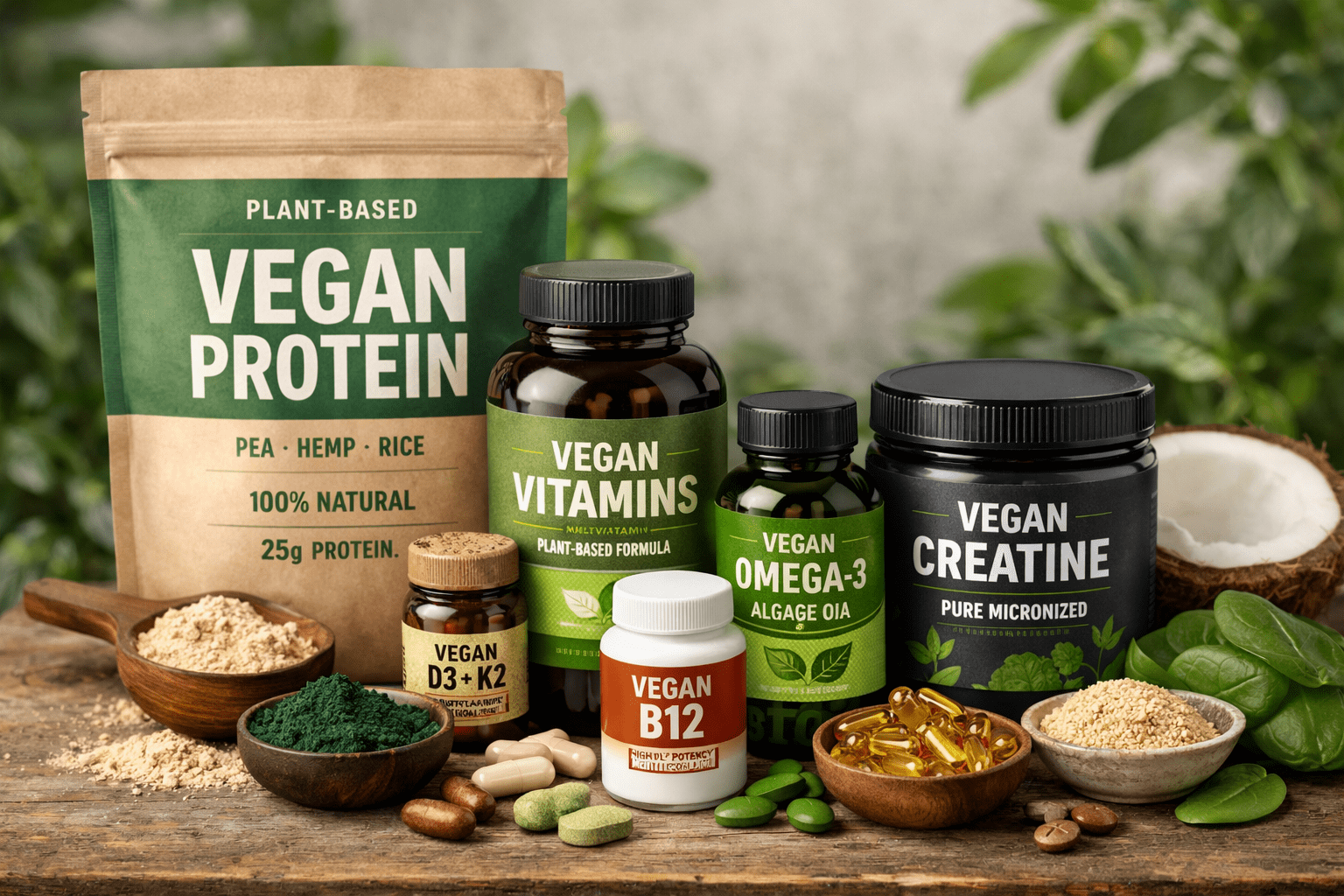
Do vegans need to take dietary supplements?
Guide The short answer: Vitamin B12 almost always — everything else depends on diet, blood values,…
Read more