
Guide
Zinc bisglycinate is a well-tolerated, highly bioavailable form of zinc and can be especially helpful for people following a vegan diet who want to support reliable zinc intake.
Note: This article does not replace medical advice. If you have symptoms, are pregnant, breastfeeding, taking medication, or have medical conditions, please consult a healthcare professional and consider checking relevant lab markers. Supplements are not a substitute for a balanced diet.
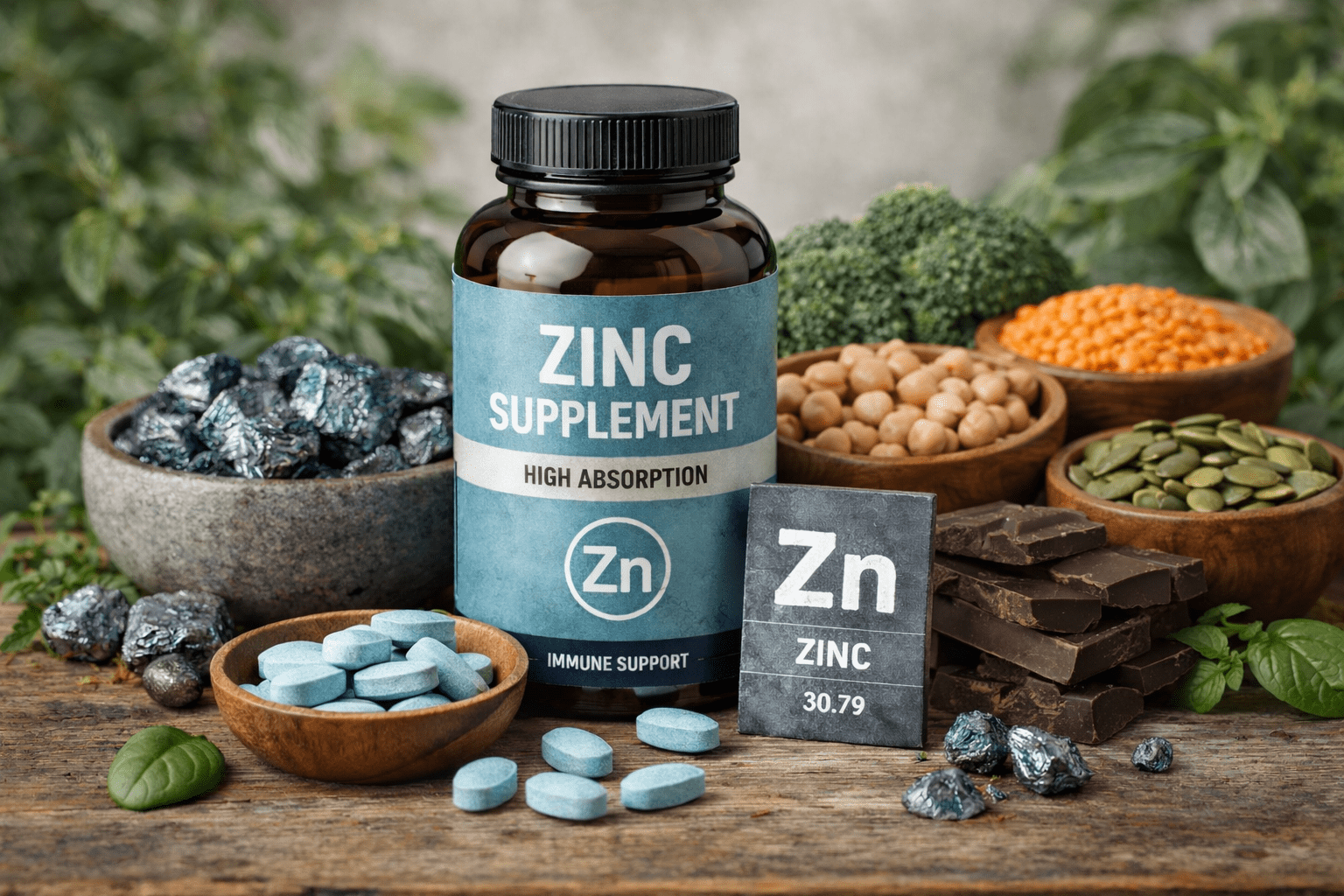
Why is everyone talking about zinc bisglycinate?
Today we’re covering a common question: What is zinc bisglycinate and what is it good for? Zinc is an essential trace mineral involved in many processes in the body. At the same time, zinc is one of those nutrients that some people—especially with a highly restrictive diet, heavy training, or high stress—may not get in optimal amounts.
This is where zinc bisglycinate comes in. It’s a form of zinc that many people find gentler on the stomach and more reliably absorbed than some classic zinc salts. That makes it a popular choice—also, and especially, for vegans.
Zinc bisglycinate: what exactly is it?
Zinc bisglycinate is a so-called chelated form of zinc. “Chelated” means the zinc ion is bound to organic molecules—here to two molecules of the amino acid glycine.
This bond often makes the compound more stable and, for many people, easier to tolerate. In addition, binding zinc to amino acids can support absorption in the gut. In simple terms: zinc “travels” with glycine and may pass through the intestine via specific transport routes.
In short: Zinc bisglycinate is a highly bioavailable form of zinc that is often well tolerated and can support efficient zinc intake.
What is zinc good for in the body?
Zinc is involved in a wide range of functions. It’s especially well known for supporting:
- Immune function: Zinc contributes to the normal function of the immune system.
- Cell renewal & recovery: Zinc plays a role in cell division and tissue processes.
- Skin, hair, and nails: Zinc contributes to the maintenance of normal skin, hair, and nails.
- Protein-related processes: Zinc is important for normal protein synthesis.
- Hormone balance: Zinc is often discussed in the context of hormonal balance and wellbeing.
So zinc isn’t only an “immune nutrient.” It’s a foundational building block for performance, recovery, and general body function—which is why a high-quality zinc supplement can be useful when dietary intake isn’t ideal.
Why is zinc bisglycinate considered highly absorbable?
A key benefit of zinc bisglycinate is that it is often described as gentle on digestion and highly bioavailable. Practically, that means you typically don’t need extreme doses to achieve a meaningful supplement contribution.
Compared with some other zinc forms, zinc bisglycinate can also be easier in daily use—especially for people who get stomach discomfort from zinc. It’s often chosen when someone wants a zinc form that is both effective and well tolerated.
Important: Even though zinc bisglycinate is often described as “less competitive,” zinc—like many minerals—can still compete with other minerals, such as copper or iron, at higher doses. Long-term, reasonable dosing and smart timing usually matter more than “more is better.”
How can vegans benefit from zinc bisglycinate?
Zinc is worth paying attention to on a vegan diet—not because vegan nutrition is “bad,” but because plant-based zinc sources often come with compounds that can reduce absorption.
1) Phytates: the classic “zinc blocker” in plant foods
Legumes, nuts, seeds, and whole grains are excellent foods—but they often contain phytates. Phytates can bind minerals in the gut and may reduce zinc absorption.
This is where zinc bisglycinate can be helpful: because it’s bound to amino acids, it’s commonly chosen as a zinc form that may work better within a phytate-rich diet than some traditional zinc salts.
2) A practical “insurance policy” while your diet isn’t perfectly dialed in
Many people start vegan and need some time to build solid routines: enough legumes, nuts and seeds, better preparation methods such as soaking, sprouting, and fermenting, and a consistent meal structure. During this phase, a zinc supplement like zinc bisglycinate can help reduce the risk of low zinc intake.
3) Training, muscle maintenance, and recovery
Zinc is relevant for normal protein-related processes and recovery. If you do a lot of fitness or strength training, steady zinc intake can be a supportive factor for recovery and overall performance.
4) Skin, hair, and nails
Low zinc status can show up in different ways, including brittle nails, hair issues, or skin concerns. Zinc bisglycinate may be a useful addition if diet alone isn’t covering your needs.
5) Hormone balance and general wellbeing
Zinc is often discussed in relation to hormone balance and wellbeing. Highly restrictive or poorly planned diets can sometimes lead to nutrient gaps—whether vegan or not. In these cases, targeted support may help stabilize overall intake.
How to take it: practical everyday tips
If you supplement zinc bisglycinate, three things matter most: dose, timing, and consistency. “Smart” supplementation is usually better than unnecessarily high dosing.
Practical tips
- If you’re sensitive: take zinc with food rather than on an empty stomach.
- If you take multiple minerals: avoid taking zinc at the exact same time as high-dose iron, copper, or calcium.
- Build a routine: consistent use, daily or on set days, often works best.
What to avoid
- Long-term “megadoses” without a clear reason or without reviewing your overall diet.
- Consistently high zinc intake without considering copper balance.
- Using supplements as a replacement for nutrition—supplements are additions, not the foundation.
Vegan tip: You can also improve zinc absorption through preparation methods—soak legumes, use sprouting, choose sourdough bread, and include fermented foods.
Quick overview: what makes zinc bisglycinate different?
| Topic | What it means | Why it matters, especially vegan |
|---|---|---|
| Chelated form | Zinc is bound to two glycine molecules. | Often well tolerated and efficiently absorbed. |
| Bioavailability | Commonly described as highly absorbable, even with sensitive digestion. | Helps support more reliable zinc intake. |
| Phytates | Plant foods can contain phytates that bind zinc. | Bisglycinate is often chosen for phytate-rich diets. |
| Immune support | Zinc contributes to normal immune function. | Demand can increase with stress or heavy training. |
| Skin, hair, nails | Zinc contributes to maintaining normal skin, hair, and nails. | Low intake may show up in visible symptoms. |
| Training & recovery | Zinc supports normal protein-related processes. | Can be a useful support nutrient for active people. |
| Mineral competition | High zinc doses may compete with copper or iron. | Reasonable dosing and timing are important long-term. |
FAQ
Is zinc bisglycinate the same as zinc chelate?
Zinc bisglycinate is a specific chelated form of zinc where the zinc ion is bound to two glycine molecules. This form is commonly described as well tolerated and highly bioavailable.
Why is zinc bisglycinate especially relevant for vegans?
Vegan zinc sources exist, such as legumes, nuts, seeds, and whole grains, but phytates can reduce absorption. Zinc bisglycinate is often chosen to support more reliable zinc intake in phytate-rich diets.
When should I take zinc bisglycinate?
Many people tolerate zinc best with a meal. If you use multiple minerals, you may want to take zinc at a different time than high-dose iron, copper, or calcium. If unsure, follow label directions and seek professional advice.
Can you take too much zinc?
Yes. Consistently high intakes over time are not advisable and may affect copper balance. Aim for targeted, reasonable supplementation and keep your overall diet and context in mind—especially for long-term use.
Conclusion
To answer the question “What is zinc bisglycinate?” in one line: it’s a highly bioavailable, often well-tolerated form of zinc where zinc is bound to two glycine molecules.
Because of its absorption and tolerability, zinc bisglycinate can support a range of goals—immune function, skin, hair and nails, recovery, and general body function. For vegans, it can be especially useful because plant-based zinc sources may be less efficiently absorbed due to phytates.
As always, supplements work best when used purposefully—aligned with your diet, lifestyle, and individual needs.
Supplements
More supplement guides

Is a vitamin B6 deficiency a problem for vegans?
In this article, we dive into vitamin b6 deficiency, an essential yet often overlooked nutrient also…
Read more
Vitamin B12 deficiency in a vegan diet: causes, symptoms and solutions
The Vitamin B complex consists of various vitamins, each with its own sources and distinct impacts…
Read more