
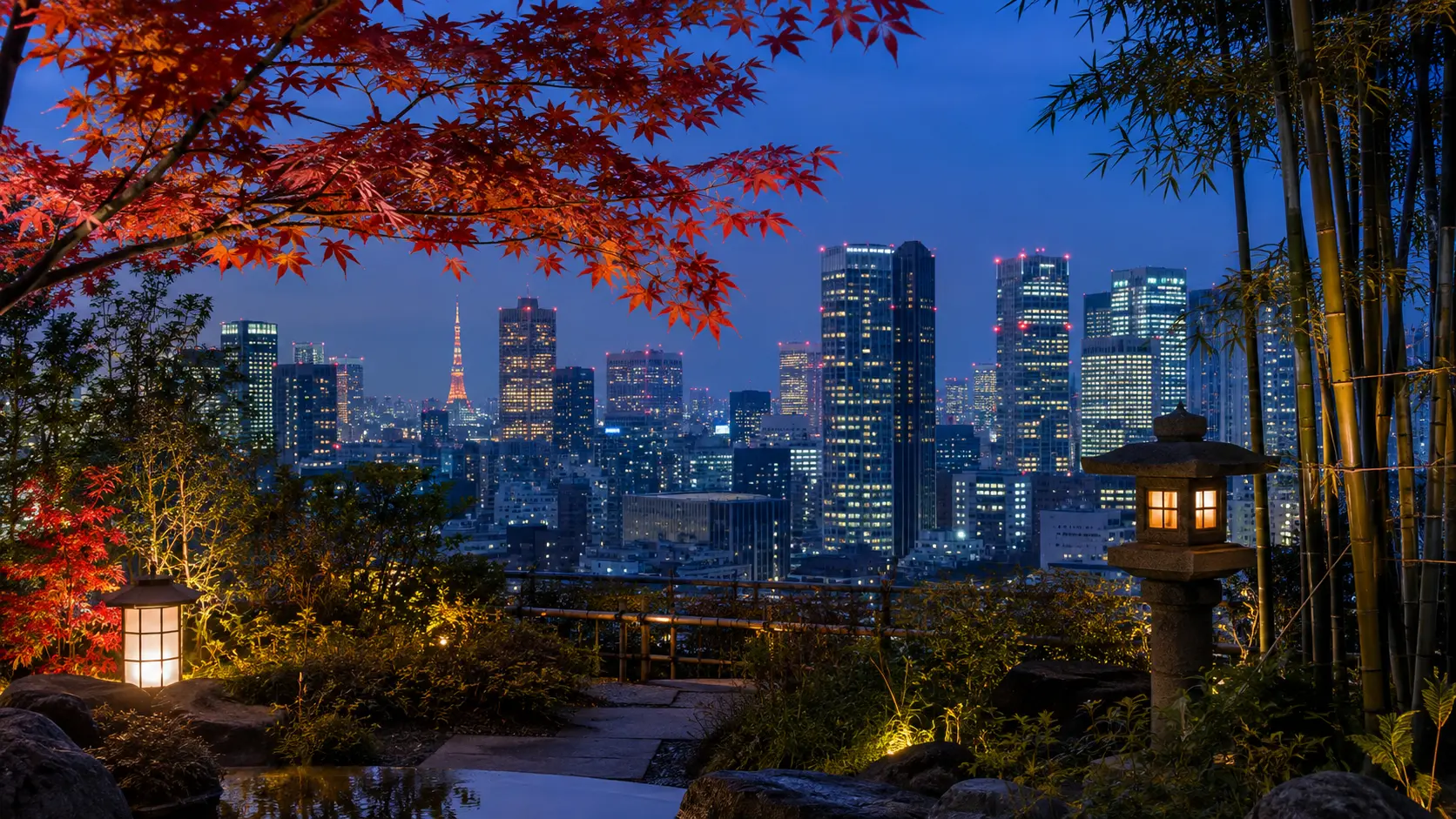
The best vegan-friendly hotels in Tokyo are The Capitol Hotel Tokyu for a dedicated vegan breakfast, Hotel New Otani Tokyo for clearly labelled buffet food and reservable vegan kaiseki, and Hotel Chinzanso Tokyo for the widest choice of plant-based fine dining. All three can be booked through Booking.com and publish unusually specific vegan information on their own websites. They are conventional luxury hotels, however—not fully vegan properties—and their kitchens also prepare animal products.
This guide answers the practical questions behind a search for vegan hotels Tokyo: what is actually vegan, whether advance notice is needed, where each hotel is located and what the official source proves. The evidence was rechecked on 31 August 2026. Menus, operating hours and reservation rules can change, so use the linked hotel page to reconfirm the arrangement before paying for a non-refundable stay.
Tokyo vegan hotel comparison at a glance
| Hotel | Best vegan evidence | Area | Classification |
|---|---|---|---|
| The Capitol Hotel Tokyu | Dedicated vegan breakfast at ORIGAMI | Nagatacho / Akasaka | Vegan-friendly mixed hotel |
| Hotel New Otani Tokyo | Vegan kaiseki plus VG-labelled buffet dishes | Kioicho | Vegan-friendly mixed hotel |
| Hotel Chinzanso Tokyo | Vegan menus at four hotel restaurants | Bunkyo / Edogawabashi | Vegan-friendly mixed hotel |
HOTEL 01 · DEDICATED VEGAN BREAKFAST
The Capitol Hotel Tokyu
The Capitol Hotel Tokyu is the clearest Tokyo choice for travellers who want a complete vegan hotel breakfast documented before arrival. Its all-day restaurant ORIGAMI publishes a dedicated vegan breakfast rather than asking guests to assemble a meal from unidentified buffet items. The current official breakfast page lists vegetable bouillon and a veggie-meat salad, followed by fruit and a choice such as vegetable Bolognese or vegetable curry. The exact composition can change, so the live menu remains the authority.
The property is not a vegan hotel. ORIGAMI also serves conventional breakfasts, lunch and dinner, and the group does not claim a separate plant-based kitchen. The strongest defensible description is therefore “vegan-friendly hotel with a dedicated vegan breakfast.” Ask the restaurant to note the vegan requirement on the reservation and disclose any food allergy separately. A dietary label does not by itself establish protection from traces or shared equipment.
Location is a major advantage. According to the hotel’s official access information, the building connects directly with Exit 6 of Tameike-Sanno Station on the Ginza and Namboku lines and with Kokkai-gijidomae Station on the Chiyoda and Marunouchi lines. That makes Ginza, Shibuya and central government districts straightforward without a taxi. Tokyo Station is described by the hotel as roughly ten minutes away by car, although traffic can alter that estimate.
The Nagatacho–Akasaka setting works especially well for a first or final Tokyo stay: it is central but calmer at night than Shinjuku or Shibuya. It also gives guests a dependable breakfast before long sightseeing days. Those who expect fully vegan room service, bakery products or dinner should not assume that the breakfast promise extends to every outlet; check each meal separately.
- Classification: vegan-friendly luxury hotel; not fully vegan.
- Verified food: a dedicated vegan breakfast at ORIGAMI, with a composed meal rather than only side dishes.
- Best for: direct subway access, a central base and travellers who value breakfast certainty.
- Confirm: current menu, booking procedure and any cross-contact or allergy requirements.
HOTEL 02 · VEGAN KAISEKI & LABELLED BUFFET
Hotel New Otani Tokyo
Hotel New Otani Tokyo has the most flexible combination of casual and formal vegan dining in this shortlist. At the Tower Restaurant, the hotel says vegan items are identified with “VG” menu cards. That is more useful than an unsupported statement that options are available, because guests can recognise individual dishes on the buffet. The hotel also states that these items are prepared in the same kitchen with the same cooking utensils as other food, and that the utensils are cleaned in the same dishwasher; cross-contamination cannot be completely eliminated. See the current official vegan buffet information.
For a destination meal, KATO’S DINING & BAR publishes a dedicated vegan course based on seasonal vegetables, beans and grains. The official vegan and vegetarian course page explicitly excludes seafood, meat, eggs, dairy, honey and derived products from the vegan course. Its listed structure includes appetisers, salad, seasonal vegetables, egg-free vegetable tempura, tofu steak and a rice or noodle choice. The hotel warns that menus may change and repeats the shared-kitchen caveat. Reserve the vegan course rather than expecting every restaurant in this very large hotel complex to improvise it.
The property occupies Kioicho in central Tokyo. The hotel’s access page gives four useful station options: Akasaka-mitsuke and Nagatacho are each about a three-minute walk, Kojimachi about six minutes and Yotsuya about eight minutes. Together they connect the hotel with six subway or rail lines. The hotel notes that the Nagatacho route contains many stairs and recommends Akasaka-mitsuke for wheelchair users or guests with a stroller.
Choose New Otani when different people in one party want different dining styles or when a formal vegan Japanese dinner is part of the trip. It is still a mixed property with numerous restaurants serving meat, fish, eggs and dairy. “Vegan selection” refers to specified dishes and courses, not the hotel as a whole. Breakfast inclusion also varies by room plan; verify that the restaurant attached to the booked rate is the one offering the desired items.
- Classification: vegan-friendly luxury hotel with shared kitchens.
- Verified food: VG-labelled Tower Restaurant buffet items and an explicitly defined vegan kaiseki-style course at KATO’S.
- Best for: central transport, mixed-diet groups and a prebooked special dinner.
- Confirm: restaurant, meal period, reservation time and whether the booked breakfast plan provides access.
HOTEL 03 · FOUR RESTAURANTS WITH VEGAN MENUS
Hotel Chinzanso Tokyo
Hotel Chinzanso Tokyo is the strongest option here for travellers who want several plant-based fine-dining possibilities without leaving their hotel. Its detailed official vegan dining guide introduces menus at four restaurants: Japanese restaurant Miyuki, Ryotei Kinsui, Italian restaurant Il Teatro and stone-grill restaurant Mokushundo. That breadth is the property’s main advantage, but the individual labels and preparation details are not identical.
Miyuki’s shojin kaiseki is the clearest editorial example. The hotel describes it as a plant-based dinner inspired by Buddhist cuisine, with kelp-based dashi, seasonal vegetables, vegetable sushi, hot pot, tempura, rice and fruit. Kinsui also offers a vegan-friendly shojin kaiseki course using vegetable-based stock, but requires a prior reservation. Il Teatro publishes a vegan and gluten-free Italian menu. Mokushundo’s menu is described by the hotel as vegetarian and gluten-free rather than unequivocally vegan, and its stone grills are reused for other dishes. Vegan guests should therefore prioritise Miyuki or Il Teatro, or ask Kinsui to confirm its complete course, instead of treating every “vegetarian” option as vegan.
This distinction matters in Japan because fish-based dashi, bonito, egg and dairy can appear in dishes that look vegetable-led. The Japan National Tourism Organization’s vegetarian and vegan guide similarly advises that the imported word “vegetarian” may be interpreted broadly. A precise reservation specifying no meat, fish, seafood, eggs, dairy, honey or animal-derived stock is safer than a last-minute general request.
Hotel Chinzanso is in Bunkyo beside its historic garden, away from Tokyo’s most intense nightlife. The official access page places it about ten minutes on foot from Edogawabashi Station on the Yurakucho Line; the walk includes a slope. A community bus or Toei bus from Edogawabashi stops at the hotel, which may be preferable with luggage. This location suits garden time, a slower luxury stay and planned hotel dining more than travellers who want to step directly into Shibuya after midnight.
- Classification: vegan-friendly luxury hotel; multiple mixed restaurant kitchens.
- Verified food: vegan menus at four restaurants, with Miyuki’s plant-based shojin kaiseki the clearest option.
- Best for: a garden setting, special-occasion dining and guests willing to reserve meals.
- Confirm: the exact restaurant and course; do not equate every vegetarian or gluten-free menu with vegan.
How to book a vegan-friendly Tokyo hotel safely
Book the room and the vegan meal as two separate decisions. First, check which breakfast or half-board plan appears in the rate conditions. Then contact the named restaurant with the stay dates, number of vegan guests and the exact meal required. A hotel may publish an excellent dinner course while the cheapest room rate includes no breakfast, or a buffet may mark vegan dishes without offering the same choices every day.
For strict vegans, ask whether stocks, sauces, dressings, noodles, bread and desserts are free from fish, bonito, dairy, egg, gelatin and honey. For allergies, use the hotel’s allergy procedure and never rely only on the word “vegan”: Hotel New Otani expressly documents shared utensils, while Hotel Chinzanso notes reused grills for one menu. Finally, retain the written reply and reconfirm shortly before arrival, especially around seasonal menu changes and public holidays.
Frequently asked questions about vegan hotels in Tokyo
Is there a fully vegan hotel in Tokyo?
None of the three properties in this guide is fully vegan. Each has strong first-party evidence for particular vegan meals, but each also prepares and serves animal-derived food. The honest classification is vegan-friendly hotel, not vegan hotel.
Which Tokyo hotel has the clearest vegan breakfast?
The Capitol Hotel Tokyu has the clearest dedicated breakfast evidence because ORIGAMI publishes a composed vegan breakfast. Hotel New Otani also labels vegan buffet items, but the available selection and the breakfast restaurant attached to a room plan should be checked.
Which hotel is best for a vegan Japanese dinner?
Hotel New Otani’s KATO’S publishes an explicitly defined vegan kaiseki-style course, while Hotel Chinzanso’s Miyuki offers plant-based shojin kaiseki with kelp-based dashi. Both are strong choices; reserve in advance and confirm the current course.
Do I need to request vegan food before arriving?
Yes. Even when a hotel publishes vegan choices, advance communication helps secure the correct restaurant, meal period and room plan. It is essential for formal courses and for any allergy or cross-contact requirement.
Which vegan-friendly Tokyo hotel should you choose?
Choose The Capitol Hotel Tokyu for the simplest documented vegan breakfast and direct subway connections. Choose Hotel New Otani Tokyo when labelled buffet dishes and a formal vegan Japanese course offer the right balance for a mixed-diet group. Choose Hotel Chinzanso Tokyo for a quieter garden setting and the broadest range of reservable plant-based fine dining.
Start with the Vegan Hotels Japan hub. Continue planning with the guides to Kyoto, Osaka, Okinawa, Hokkaido and Hakone & Mount Fuji.
Hotel, dining and transport information was checked against the linked official hotel and tourism pages on 31 August 2026. Menus, ingredients, reservation rules, transport details and availability can change; reconfirm directly before booking or travelling. Booking buttons are affiliate links.
Hotels
More vegan hotel guides

The best vegan-friendly hotels in Europe
In this blog post, you’ll find the best vegan-friendly hotels in Europe. We’ve made it our…
Read more
The best vegan-friendly wellness hotels
If you’re looking for a vegan or vegetarian getaway where you can truly relax, vegan wellness…
Read more