
Vegan Hotels in South Korea
Explore seven carefully researched city and regional guides, covering 28 vegan-friendly stays from Seoul and Busan to Jeju Island, historic hanok cities and the mountains of Gangwon.
Choose the route. Verify the meal. Travel kindly.
Three major gateways, two heritage cities and two nature-focused regions.
Hotels, hanok guesthouses and one clearly labelled independent temple stay.
Official menus, specialist concepts, active listings and advance requests stay separate.
Confirm the exact meal, ingredients, date and restaurant before paying.
The direct answer
Where should vegan travellers stay in South Korea?
Seoul is the strongest first base, Busan adds a relaxed coastal city break, and Jeju Island is the clearest resort region. Gyeongju and Jeonju are the best heritage additions, Gangwon combines Sokcho, Seoraksan and the east coast, while Incheon Airport and Songdo solve a specific stopover or business-travel question. None of the 28 selected properties is presented as an entirely vegan hotel. The strongest evidence ranges from a dedicated vegan suite or an official named menu to a current property-supplied Booking.com breakfast label. Every guide explains that difference.
Explore South Korea
Seven essential city and region guides
The collection balances international tourism relevance, route logic and property-specific vegan evidence. A large city does not receive a guide merely because it has many hotels, and a breakfast label is never expanded into a claim that the whole property is vegan.
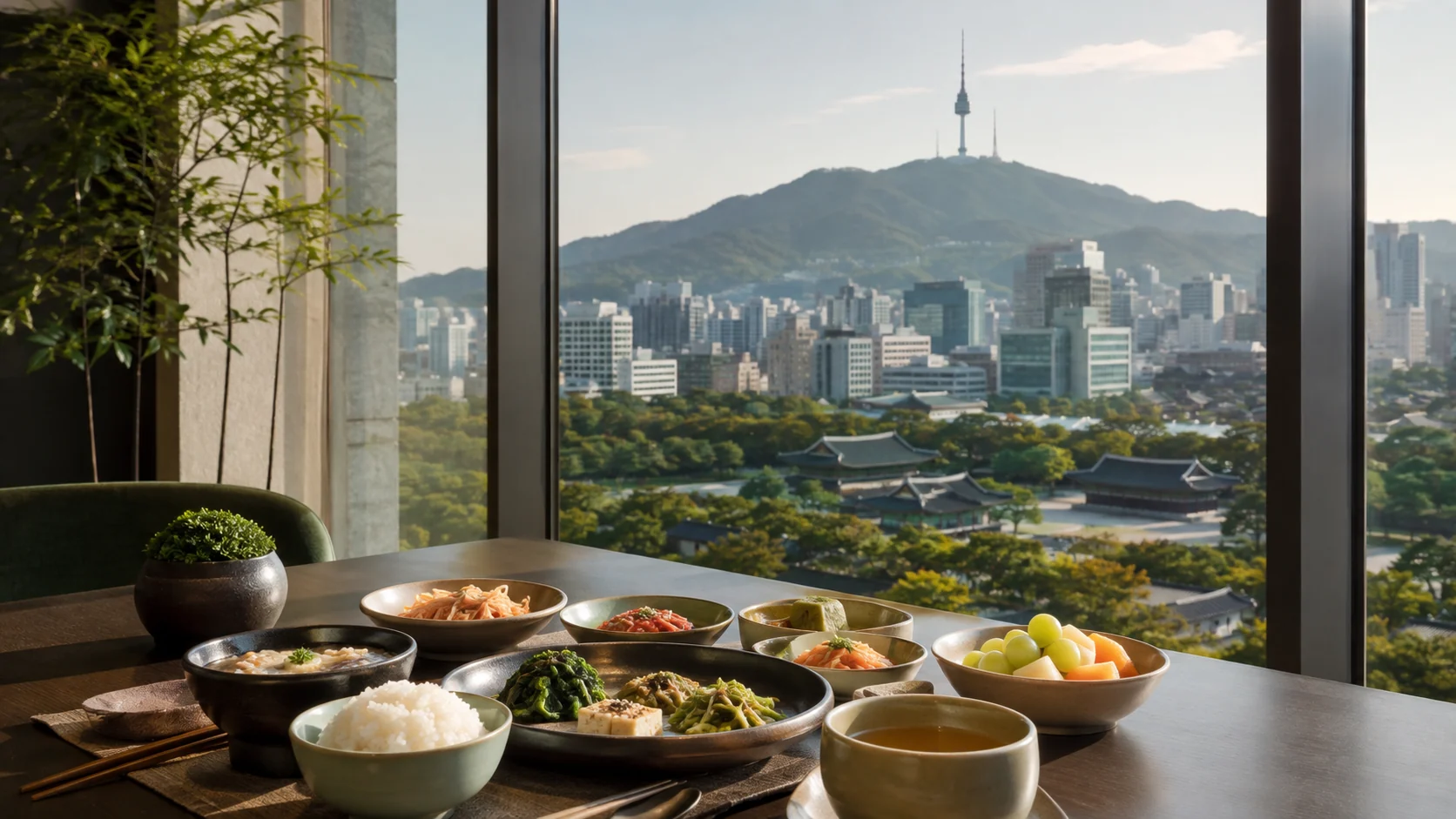
Seoul
Seoul has the cluster’s deepest first-party evidence: a hotel breakfast page that names vegan dishes, dedicated restaurant menus, several documented vegan choices and a specialist vegan suite inside a conventional hotel. Choose Mapo for river access, Gwanghwamun for palaces, Gangnam for COEX or eastern Seoul for the suite.
Open Seoul guide →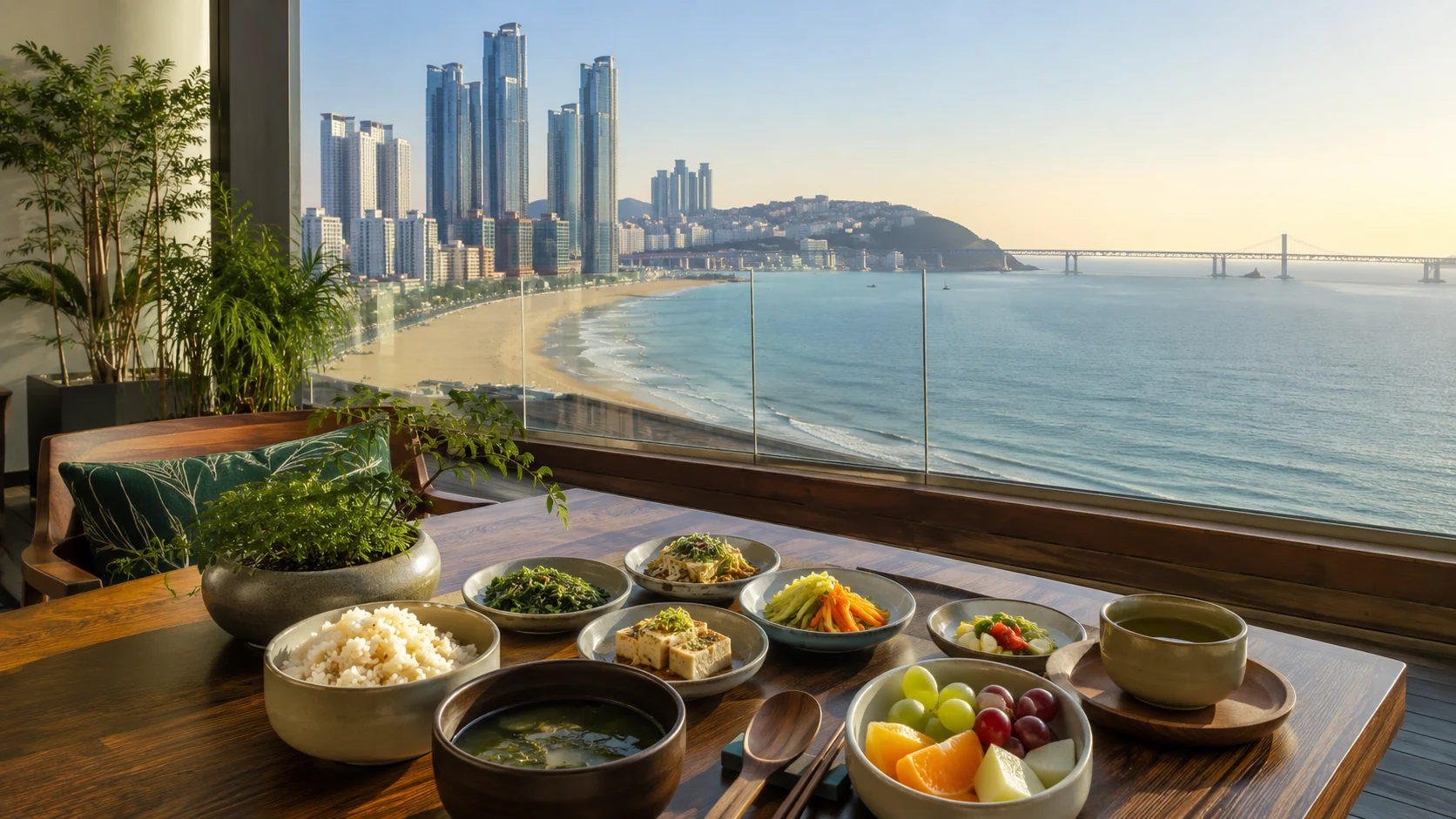
Busan
Busan combines Haeundae, Marine City and Songdo with the most practical southern gateway. The selected stays include official hotel pages naming vegan choices, a documented vegan course that must be reconfirmed, and property-supplied breakfast labels. The guide separates beach location from the strength of the food evidence.
Open Busan guide →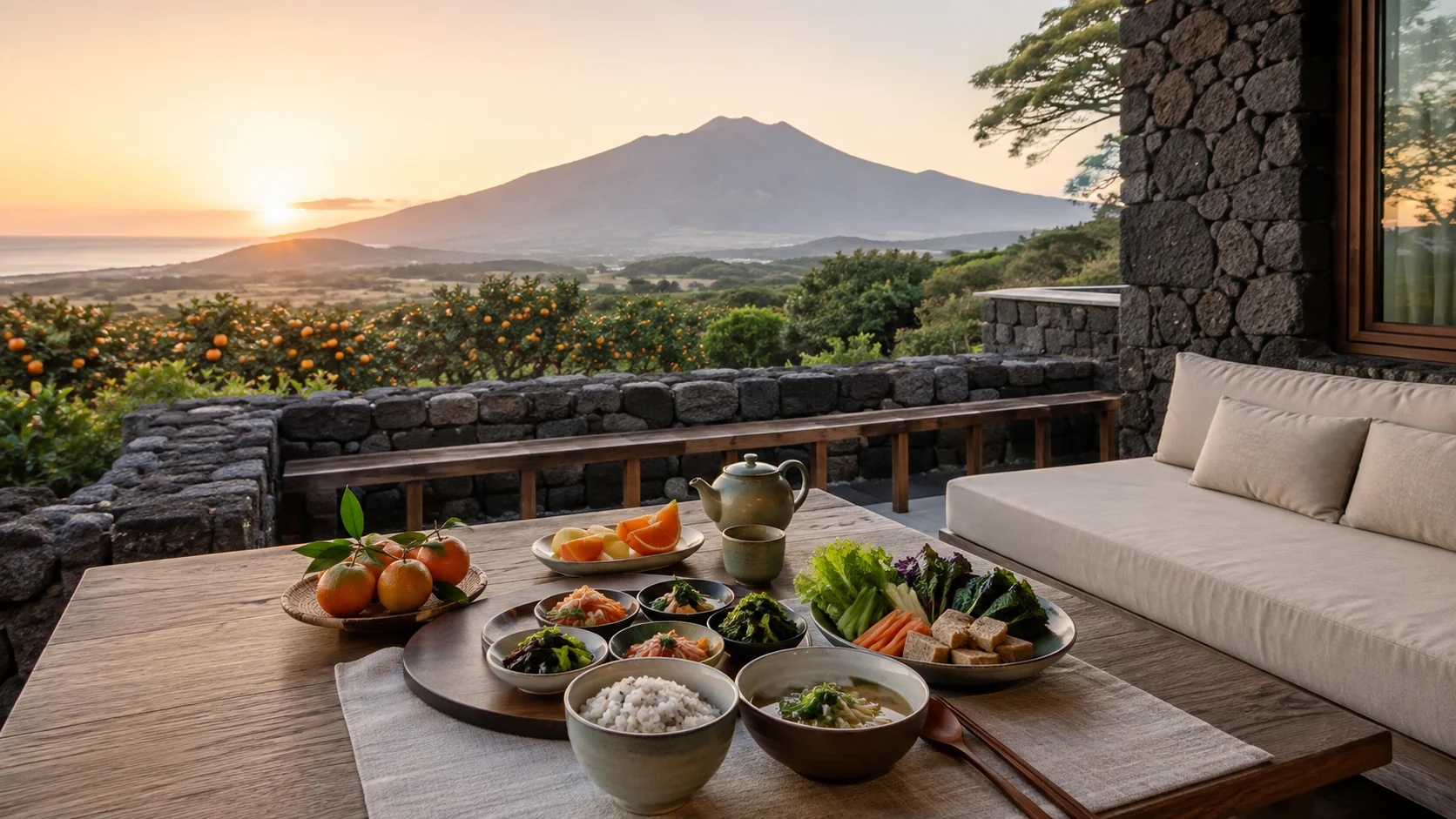
Jeju Island
Jeju remains deliberately selective. Three south and southwest coast properties publish credible evidence such as a dedicated vegan room-service section, vegan granola with coconut milk or vegan bread and garden salad. None proves an entirely vegan kitchen, and the guide does not add a weak fourth candidate merely to round out the list.
Open Jeju guide →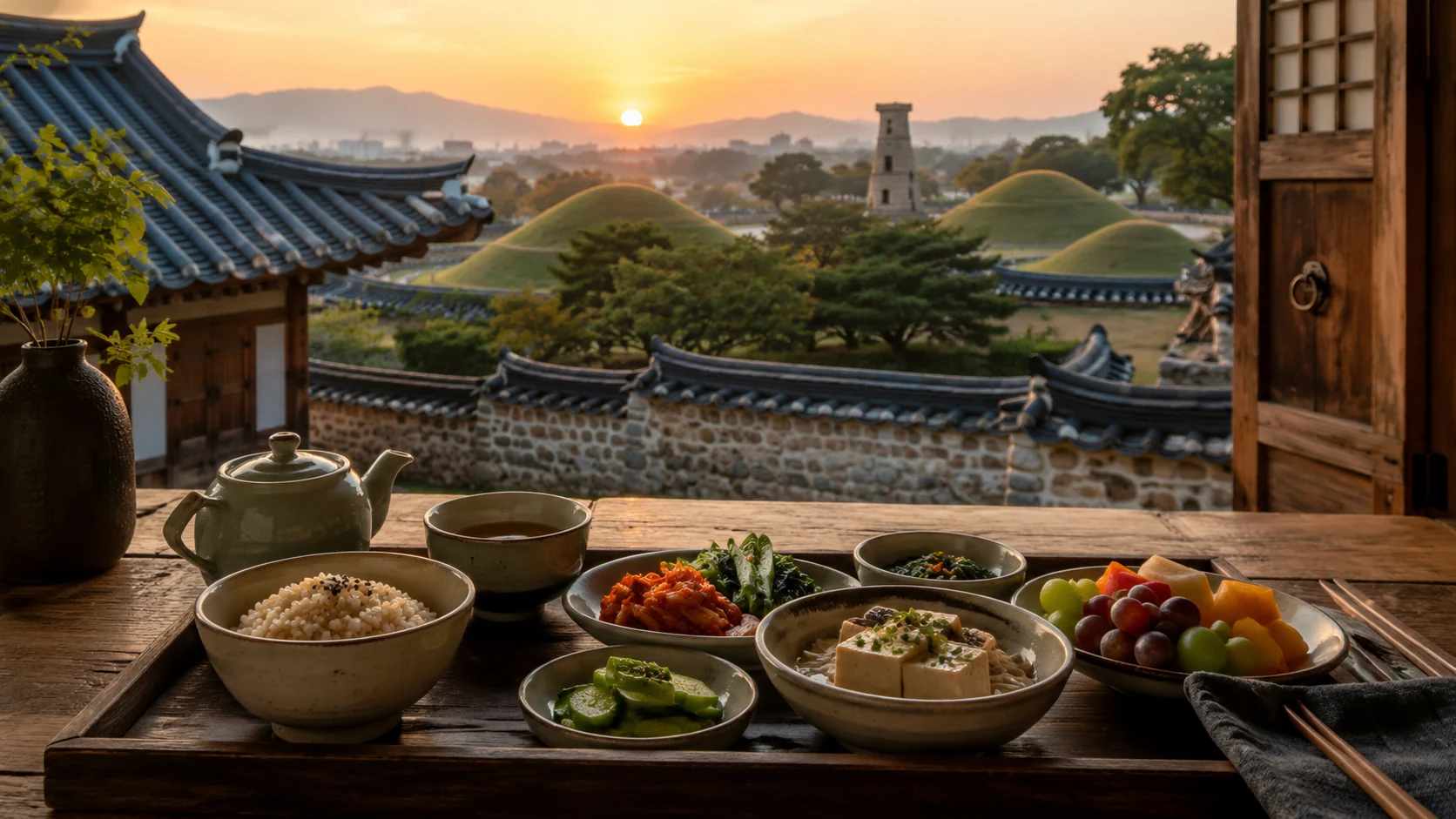
Gyeongju
Gyeongju pairs UNESCO-listed Silla heritage with two very different accommodation zones: the walkable historic centre and the full-service resorts around Bomun Lake. Current vegan evidence is strongest at selected hanok stays; resort kitchens are treated as request-first or documented capability, not as a standing vegan promise.
Open Gyeongju guide →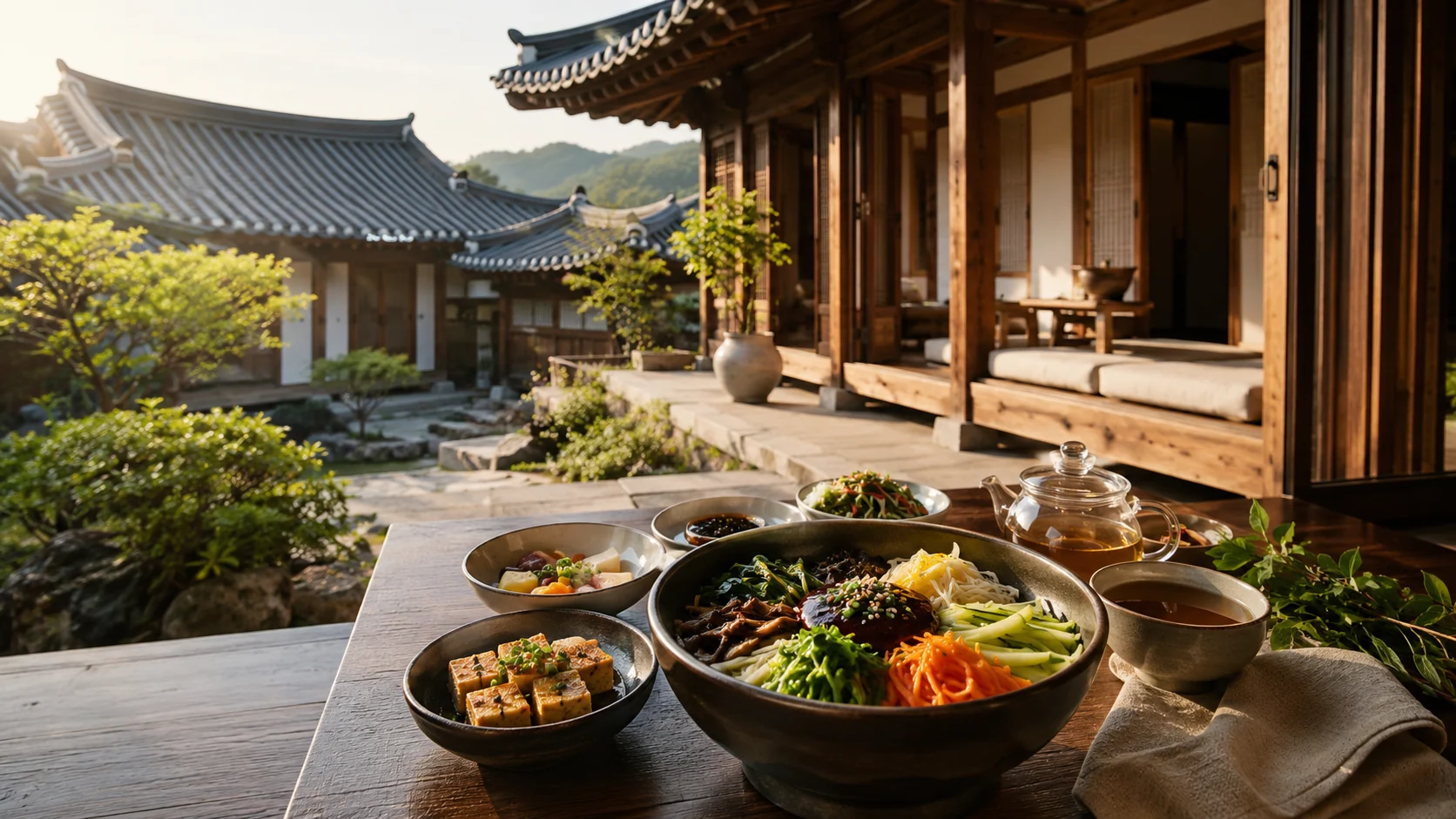
Jeonju
Jeonju is a useful myth-busting guide: the city is famous for bibimbap, yet the standard dish commonly contains meat and egg. Four central hotels and hanok-style guesthouses currently advertise vegan breakfast or dining through their active listings, but several normal breakfast descriptions also name egg or cheese, so a separate plate must be agreed.
Open Jeonju guide →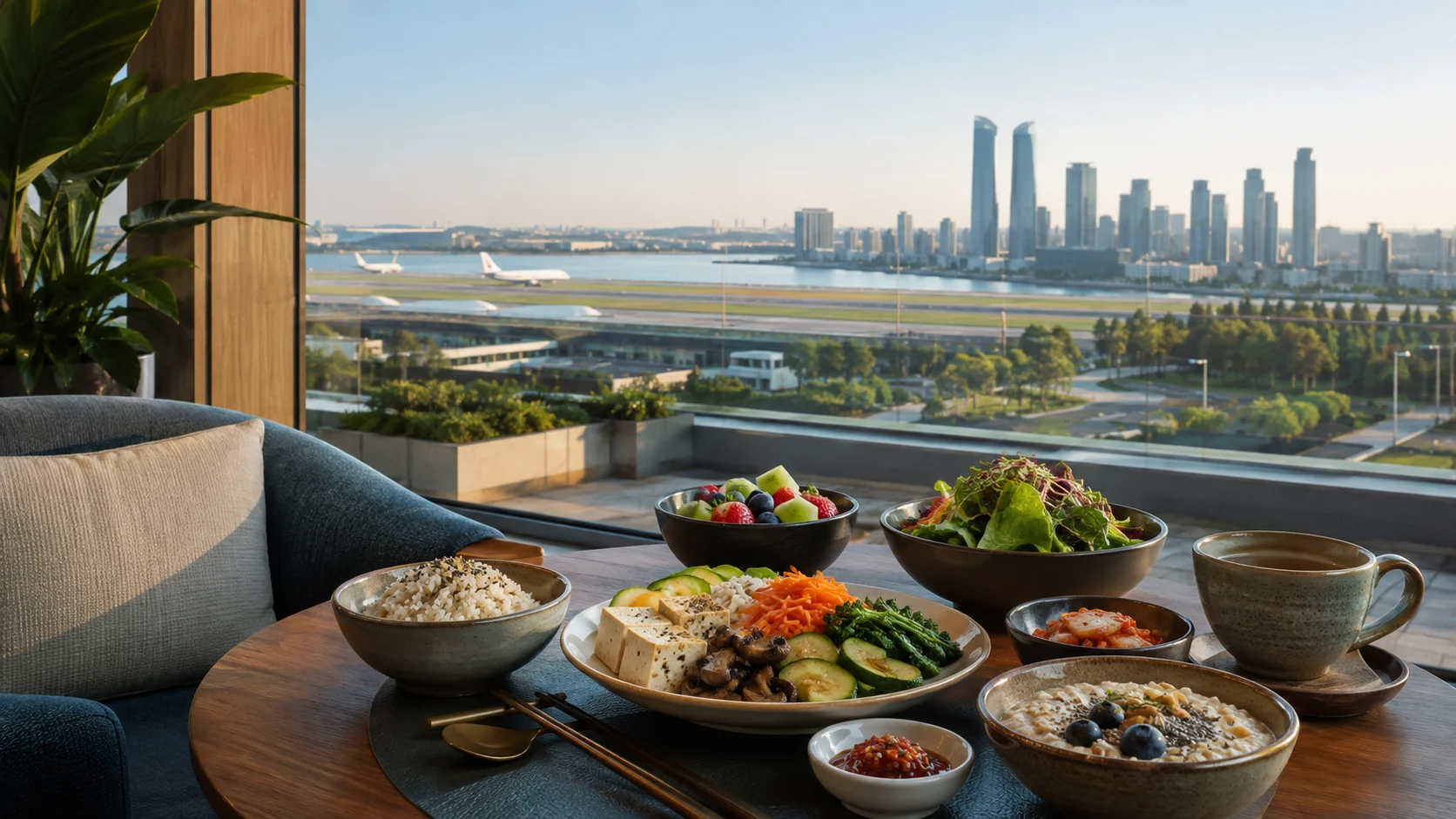
Incheon Airport & Songdo
This is not a generic Incheon city guide. It answers two narrow needs: a reliable night near the international airport and a stay around Songdo Central Park or the convention district. The four choices use current official vegan-option wording or documented plant-based menu evidence, with terminal and district location explained before food detail.
Open Incheon guide →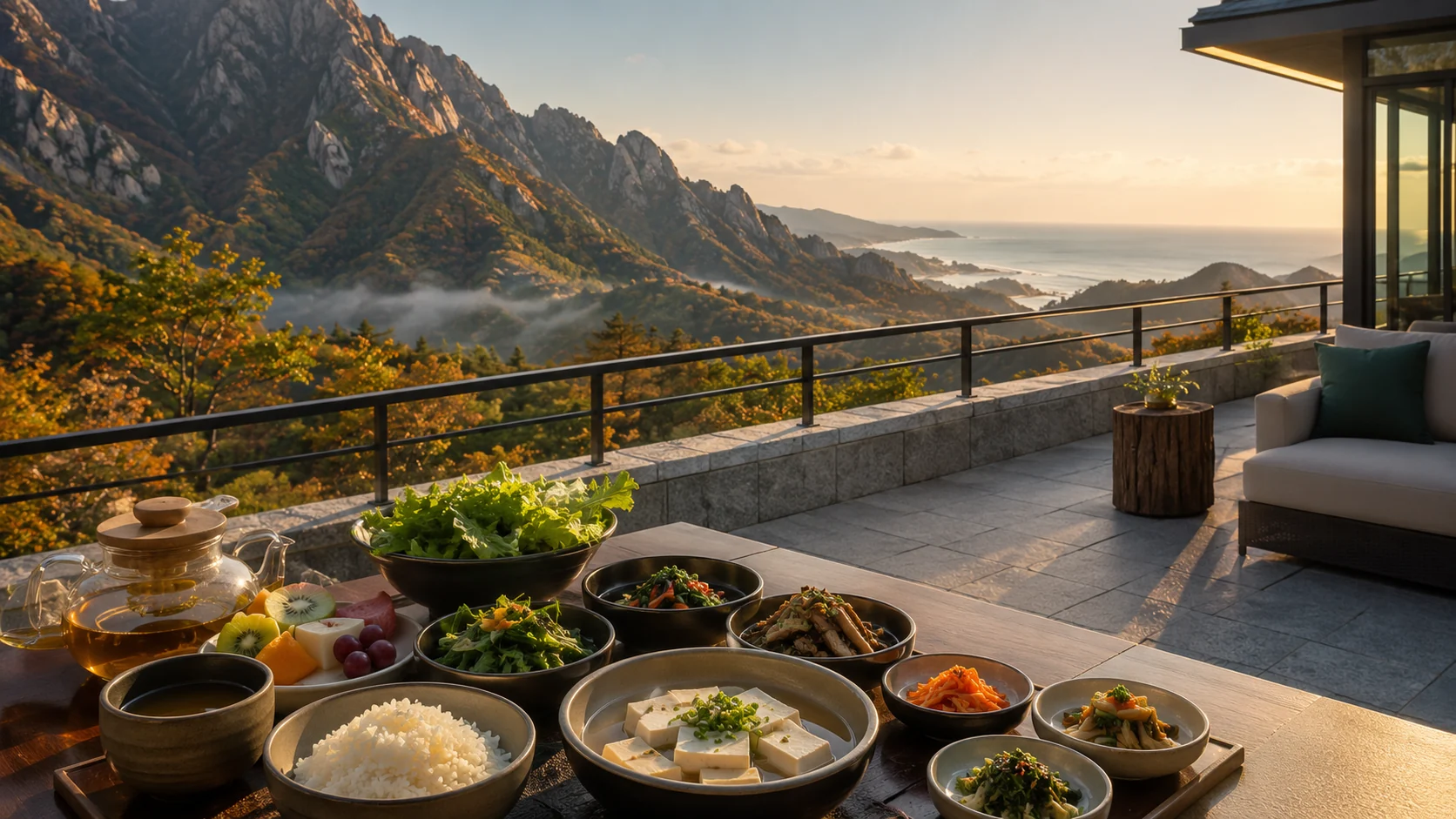
Gangwon
Gangwon covers a route rather than pretending one town represents the province: Sokcho and Seoraksan, Gangneung’s coast, a Jeongseon mountain resort and one independent temple stay near Yangyang. Evidence is thinner than in Seoul or Jeju, so every Booking.com meal label and the temple-food caveat are especially prominent.
Open Gangwon guide →Compare the route
South Korea destinations at a glance
Use this table to choose the right base first. The evidence column summarises the strongest source type in each guide; it does not mean that every listed hotel reaches that level.
| Destination | Best for | Suggested base | Strongest current evidence | Guide |
|---|---|---|---|---|
| Seoul | First visit, palaces, urban dining | Gwanghwamun, Mapo or Gangnam | Official menus + vegan suite | Read guide |
| Busan | Beaches, harbour and coastal city | Haeundae, Marine City or Songdo | Official options + listings | Read guide |
| Jeju Island | Resort stay, hiking and coast | Jungmun, Andeok or Seogwipo | Official named vegan dishes | Read guide |
| Gyeongju | Silla history and heritage | Historic centre or Bomun Lake | Listings + request capability | Read guide |
| Jeonju | Hanok Village and food culture | Inside or beside Hanok Village | Property-supplied listings | Read guide |
| Incheon Airport & Songdo | Stopovers, early flights, business | Yeongjong or Songdo | Official vegan options | Read guide |
| Gangwon | Seoraksan, east coast and skiing | Sokcho, Gangneung or Jeongseon | One official dish + listings | Read guide |
Evidence, not assumptions
What the four evidence tiers mean
The tier describes the source and scope of the food claim. It is not a hotel star rating, sustainability score or guarantee against cross-contact in a shared kitchen.
Specialist vegan unit
A hotel explicitly describes a particular room, suite or package as vegan. Seoul’s Grand Vegan Suite is the collection’s clearest example, but the wider hotel still serves animal products. No selected South Korea property is labelled entirely vegan.
Official vegan menu
The exact hotel publishes a named vegan dish, menu section or restaurant option on its own website. The guide identifies the venue and meal period and never extends one dinner item into a promise about breakfast.
Active booking listing
Booking.com currently identifies vegan breakfast or dining in property-supplied information. This is useful commercial evidence, but ingredients, rate inclusion, service dates and preparation still require direct confirmation.
Advance request
A conventional hotel documents dietary handling or past capability without a permanent vegan item. Treat it as a conversation route, not a guaranteed meal, and keep the written reply with the reservation.
Geography & logistics
Build a South Korea itinerary that works
South Korea is compact enough for a multi-stop trip, yet Gangwon, Jeju and the southern cities still require different transport decisions. Use official train and bus information for the route, then solve the meal at property level.
Classic first trip
Seoul → Gyeongju → Busan combines the capital, Silla heritage and the coast in roughly ten to fourteen days. Seoul and Busan have the broadest hotel infrastructure, while Gyeongju supplies the clearest historic contrast.
The Korea Tourism Organization train guide explains the KTX and other intercity train types. Check the live operator timetable before paying because service patterns and seat availability change.
Food and heritage route
Seoul → Jeonju → Gyeongju → Busan works when hanok architecture and regional food culture matter as much as headline sights. Jeonju’s famous dishes still need explicit vegan adaptation; Gyeongju requires a choice between the historic centre and Bomun Lake.
Regional cities can also be linked by bus. The current official express and intercity bus guide explains why buses reach many destinations that are less convenient by rail.
Nature-focused route
Seoul → Gangwon → Jeju pairs mountain hiking and the east coast with volcanic island scenery. It needs more planning than a straight north-south city route: Gangwon is reached by rail or bus, while Jeju normally adds a domestic flight and local transport or a rental car.
Jeju’s selected stays cluster on the south and southwest coast, so do not assume one hotel is equally practical for Hallasan, Seongsan and Udo. The Gangwon guide likewise separates Sokcho, Gangneung and Jeongseon rather than calling them nearby.
Best for a first visit
Choose Seoul, Gyeongju and Busan. Incheon Airport can be a practical first or last night, but it should not replace Seoul unless a layover, early flight or Songdo appointment defines the trip.
Best for hotel menu evidence
Look first at Seoul and Jeju. Their strongest choices publish official vegan menus or named dishes. Busan and Incheon also have good first-party signals, but each claim still belongs to a specific restaurant or meal.
Best for heritage stays
Choose Gyeongju or Jeonju for hanok accommodation. These small stays often rely on property-supplied breakfast descriptions rather than extensive official menus, so ingredient-level communication matters more than luxury services.
Use the complete request
A practical Korean message is: 저는 비건입니다. 고기, 생선·해산물, 멸치육수, 액젓·젓갈, 달걀, 우유·버터·치즈, 꿀 없이 부탁드립니다. It excludes meat, fish and seafood, anchovy stock, fish sauce and fermented seafood, eggs, dairy and honey.
Check Korean staples
Bibimbap may contain beef and egg; gimbap commonly includes egg, ham or fish cake; soups can use meat or anchovy stock; and kimchi may contain fish sauce or salted shrimp. The official vegetarian ordering guide explains common pitfalls.
Save the exact reply
Contact the property 48–72 hours ahead where the guide does not state a longer deadline. Name the date, restaurant and meal, ask whether it is included in the chosen rate, and retain the written reply offline. Discuss severe allergies separately.
How this collection works
Tourism value plus current hotel evidence
The seven-guide structure is intentionally broader than a simple list of the country’s largest cities. The Korea Tourism Organization’s current suggested itinerary system includes Seoul, Busan, Jeju, Jeonju, Gyeongju, Sokcho, Gangneung, Incheon and Gangwon among its destination filters. Its 100 Must-Visit Tourist Spots adds attraction-level context. Those official lists establish travel relevance, but they do not prove that a hotel serves vegan food.
Hotel inclusion requires a current source tied to the exact property. First-party menus and dining pages receive the greatest weight. A current Booking.com meal label can support a recommendation when the guide identifies it as property-supplied listing evidence. A past event, a general sustainability page or a vegetable dish that is not labelled vegan can only show possible kitchen capability; it cannot be promoted as a permanent vegan offer.
That distinction changes the size of the guides. Jeju has a large resort market but only three candidates meet this editorial threshold without stretching the evidence. Gangwon keeps four very different stays because the page solves a regional itinerary question, but it labels one as an independent temple stay and explains that Korean temple food may include dairy or honey unless the operator confirms otherwise. Gyeongju and Jeonju include hanok guesthouses because that accommodation type is central to the travel experience and currently carries stronger breakfast evidence than many conventional hotels.
The selection also avoids false geography. Incheon is useful only when framed around the airport and Songdo. Gangwon cannot be reduced to Sokcho alone. Jeju’s three properties do not cover the east of the island. A guide should help a traveller choose the right location before clicking a booking button, because a well-documented vegan dinner is not useful if the hotel creates hours of unnecessary travel.
Booking.com receives priority where a current affiliate route exists, matching the site’s commercial model. That priority never changes the evidence score. Independent booking is retained when it is the realistic route for a specialist stay, and all commercial links remain secondary to the official source and direct dietary confirmation.
The result is a focused launch collection rather than an exhaustive directory. New destinations should be added only when their tourism value, hotel evidence and distinct planning question justify a full article. This keeps comparisons useful and prevents repeated generic recommendations from diluting stronger, property-specific guidance.
Practical answers
Vegan hotels in South Korea: FAQ
Are there fully vegan hotels in South Korea?
No selected property in this launch collection is verified as an entirely vegan hotel. Seoul has a dedicated Grand Vegan Suite inside a conventional hotel, and several hotels publish official vegan dishes or menus. The surrounding kitchens and other restaurants may still prepare animal products.
Which destinations are easiest for a first vegan trip?
Seoul, Gyeongju and Busan create the clearest first route. Seoul has the broadest first-party hotel evidence, Gyeongju adds concentrated heritage, and Busan provides a coastal finish. Add Jeju for resort scenery or Gangwon for mountains when the itinerary has enough time.
Can the selected stays be booked through Booking.com?
Most guides prioritise Booking.com affiliate routes when a current property or search result is available. Some specialist or independent stays may require direct booking. Always compare cancellation terms and confirm that the documented vegan meal applies to the chosen dates and rate.
How should I request a vegan hotel meal in Korea?
Name the exact meal and exclude meat, fish, seafood, anchovy or meat stock, fish sauce, fermented seafood, egg, dairy and honey. Contact the property in writing before arrival, keep its answer and reconfirm at check-in. A general request for vegetarian food is not precise enough.
Is Korean temple food automatically vegan?
Not always. Korean temple cuisine usually excludes meat, fish and seafood, but official tourism guidance notes that dairy can occur, and honey should also be checked. Treat a temple stay as vegetarian unless the exact programme confirms every ingredient and preparation requirement.
Choose the right South Korea base
Start with a destination guide, verify the exact meal, then book the stay that fits the route.
Destination and hotel evidence checked 1 September 2026. Menus, ingredients, transport, prices and availability can change. Booking buttons in the destination guides may be affiliate links.