
Vegan Hotels in China
Explore nine carefully researched city and regional guides, from Beijing and Shanghai to Yunnan, Zhangjiajie and the karst landscapes of Guilin and Yangshuo.
Choose the route. Verify the meal. Travel kindly.
Five major city anchors and four scenic city-region or holiday-region guides.
Clear labels separate fully vegan concepts from menus, listings and requests.
Eight mainland guides plus Hong Kong as a clearly identified SAR extension.
Reconfirm the exact meal in writing before choosing a restrictive rate.
The direct answer
Where should vegan travellers stay in China?
Beijing, Xi’an and Shanghai form the clearest first route; Chengdu adds pandas and Sichuan culture, while Hangzhou, Guilin, Zhangjiajie and Yunnan add very different landscapes. Hong Kong is included as a separate Special Administrative Region extension because it has strong hotel choice but its own entry, currency and transport systems. China has far more mixed hotels with selected vegan meals than fully vegan properties, so these guides rank evidence instead of treating every “vegan-friendly” label as equal.
Explore China
Nine essential city and region guides
The selection balances international tourism importance, route logic and credible hotel evidence. Every destination article distinguishes a fully vegan property from a vegetarian concept, a documented vegan menu, an OTA breakfast label or a meal that exists only by advance request.
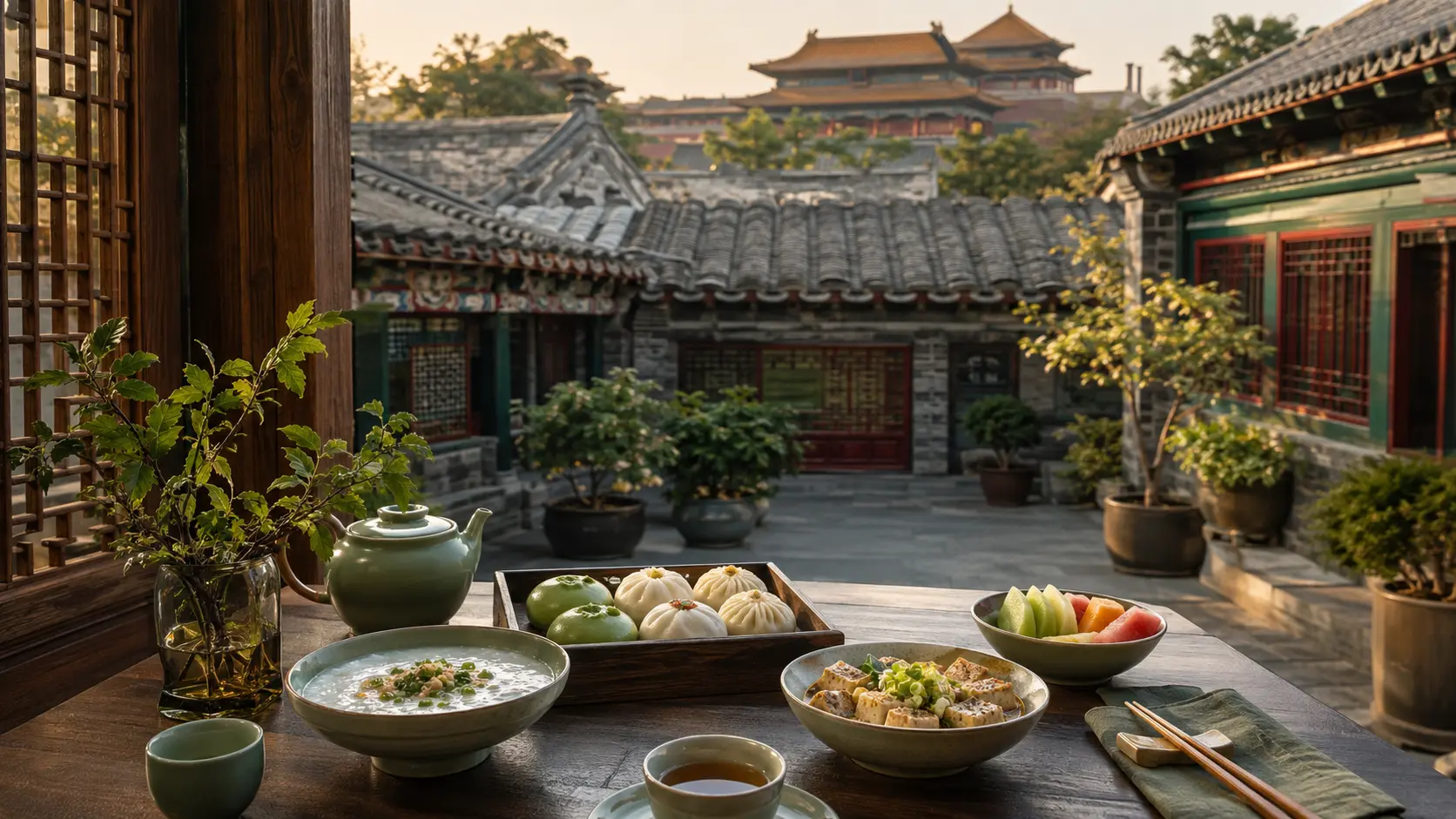
Beijing
Use the capital for the Forbidden City, hutongs and Great Wall day trips. The guide prioritises well-located hotels with property-specific vegan dining evidence or a clear advance-request route; none is assumed to be entirely vegan.
Open Beijing guide →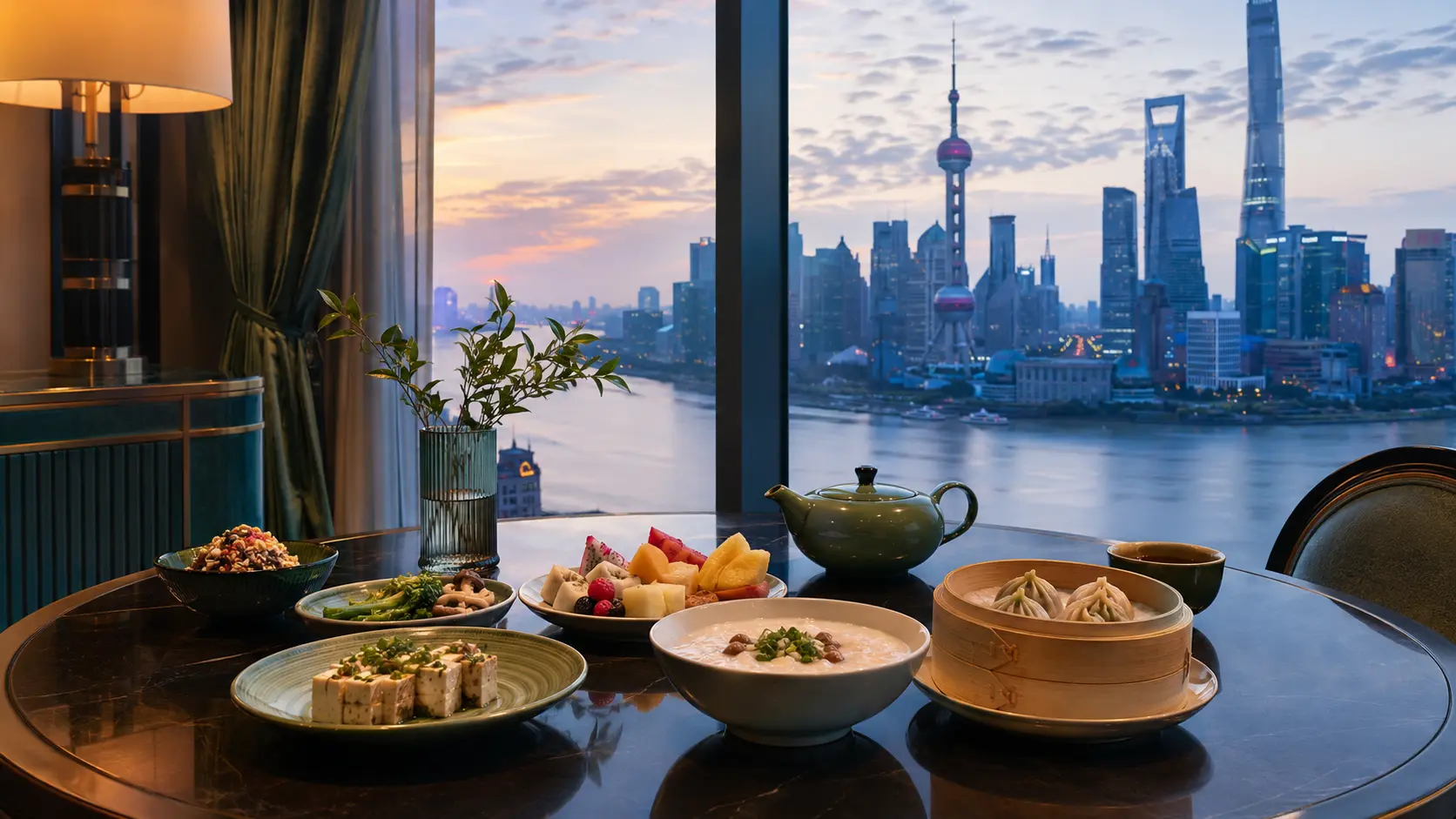
Shanghai
Shanghai combines the Bund, former concession neighbourhoods and Pudong with one of the collection’s stronger pools of documented plant-based hotel dining. Check whether the evidence applies to breakfast, a named restaurant or a reservable menu.
Open Shanghai guide →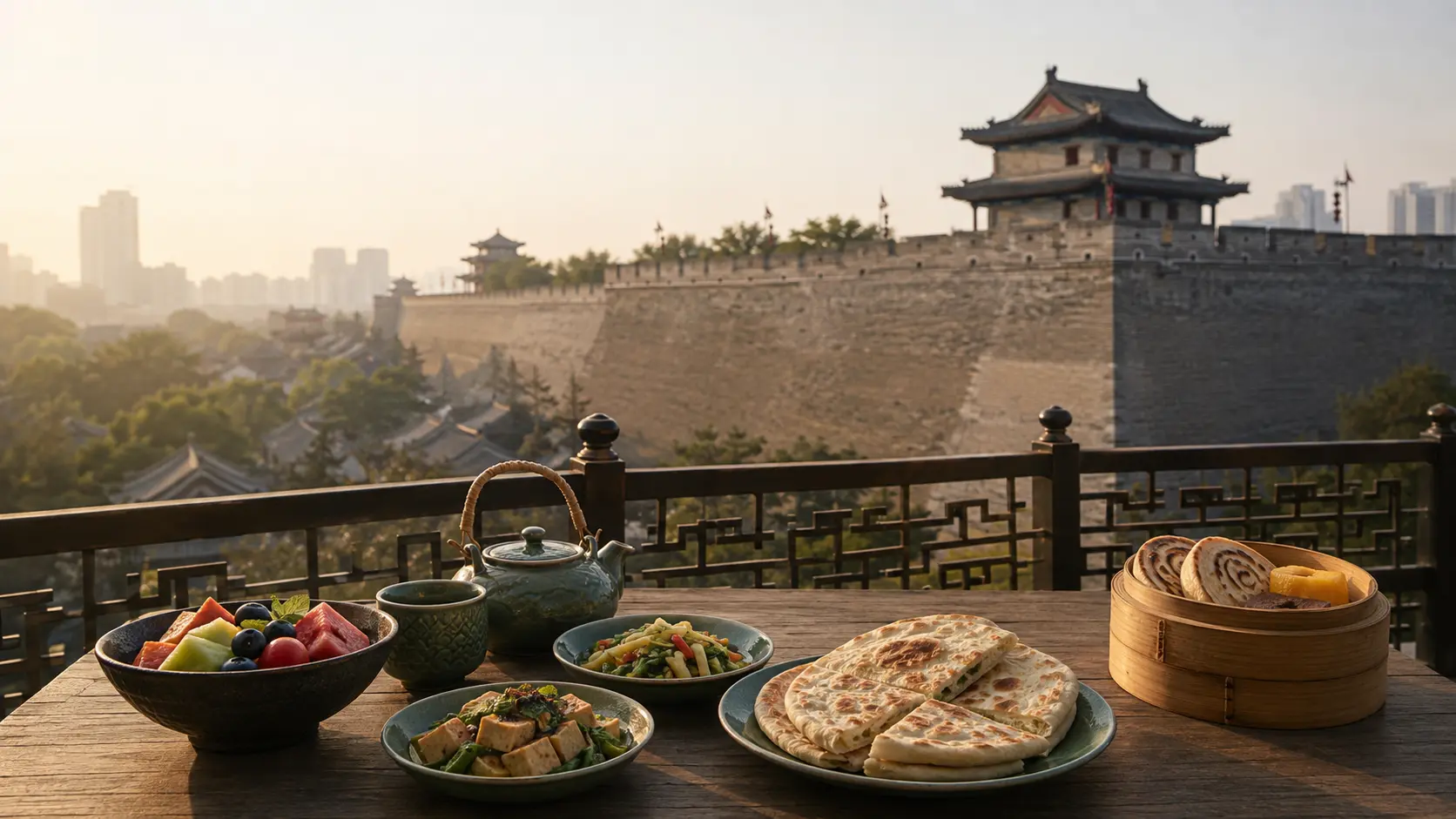
Xi’an
Xi’an is the historic anchor for the city walls, Muslim Quarter and Terracotta Army route. Four mixed hotels currently provide useful vegan breakfast or dining signals, but no fully vegan hotel has been verified.
Open Xi’an guide →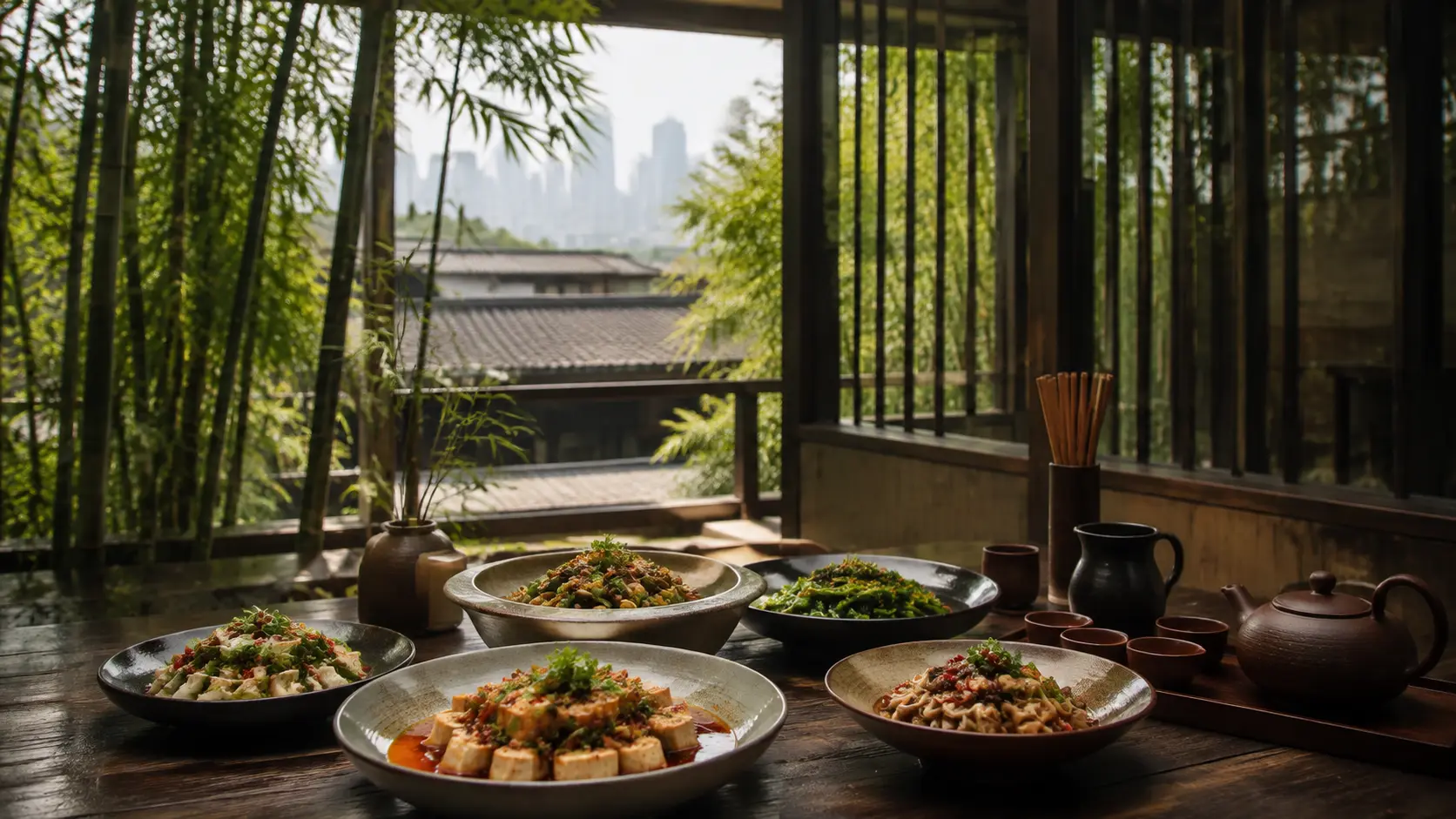
Chengdu
Chengdu works for panda visits, teahouses and Sichuan food. Its strongest evidence is an officially plant-based Sichuanese hotel restaurant, supported by several practical hotels whose active listings identify vegan breakfast or dining options.
Open Chengdu guide →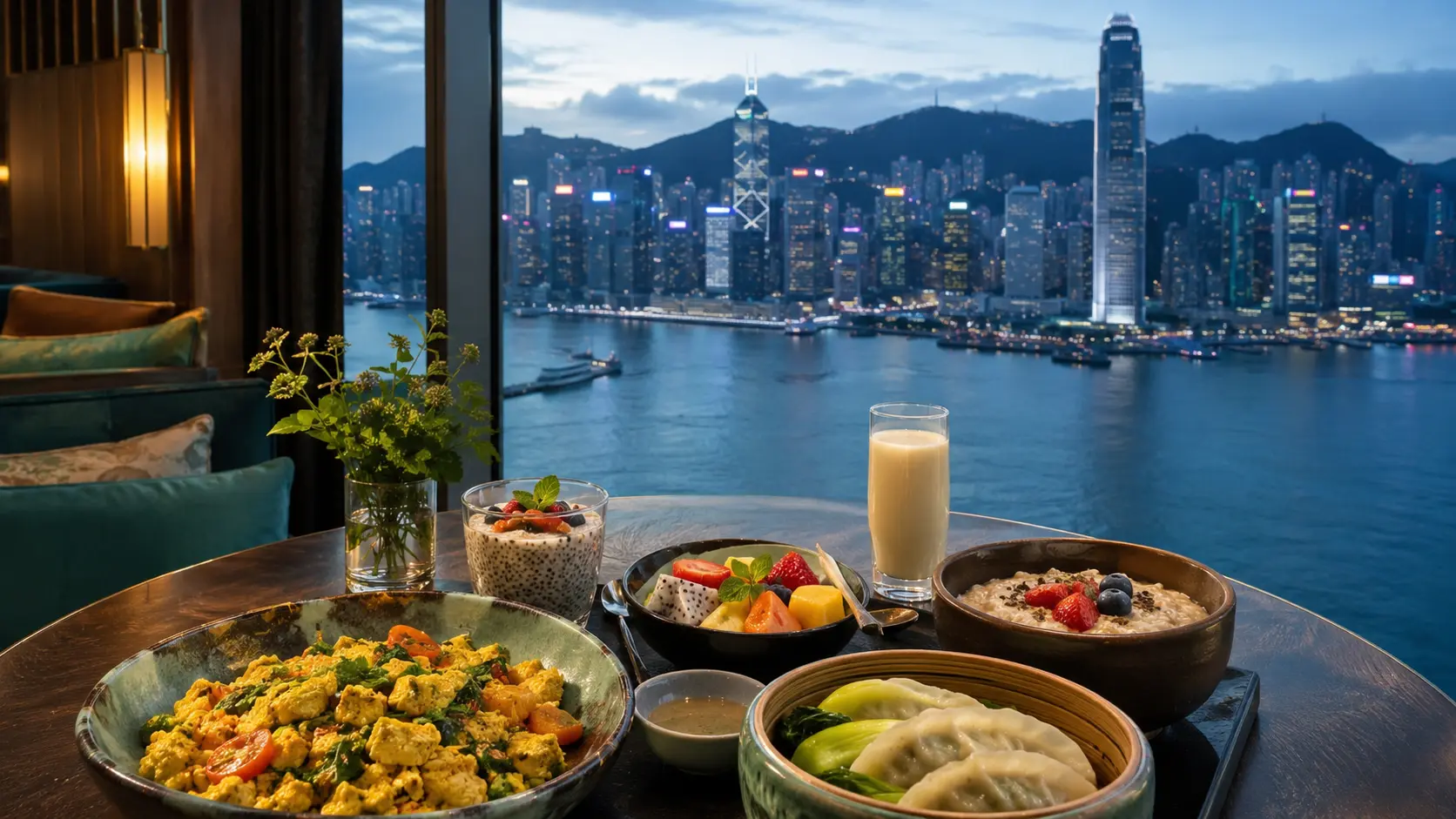
Hong Kong
Hong Kong offers dense public transport, a broad restaurant scene and comparatively strong vegan hotel search intent. Treat it as a separate SAR leg: reconfirm entry requirements, payment, connectivity and onward travel independently from mainland China.
Open Hong Kong guide →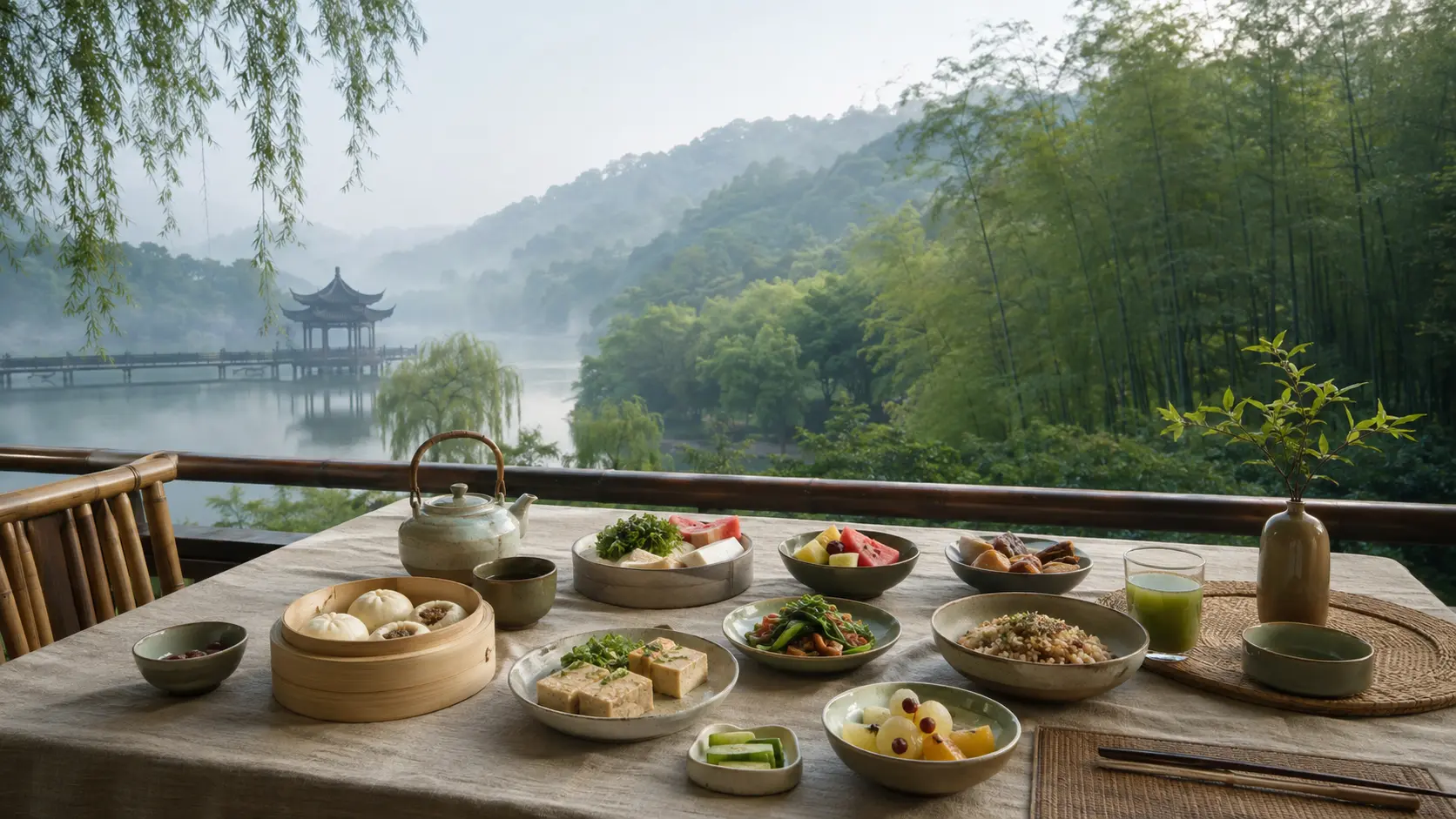
Hangzhou & Moganshan
Pair UNESCO-listed West Lake and Hangzhou’s city break with the forest retreats of Moganshan. Combining them avoids a thin city-only page and allows the guide to compare mainstream hotels with a specialist vegan retreat.
Open Hangzhou guide →
Guilin & Yangshuo
Guilin is the transport gateway; Yangshuo is the slower countryside base for the Li River and karst landscape. One combined guide keeps the real travel corridor intact and explains which vegan meal claims need direct confirmation.
Open Guilin guide →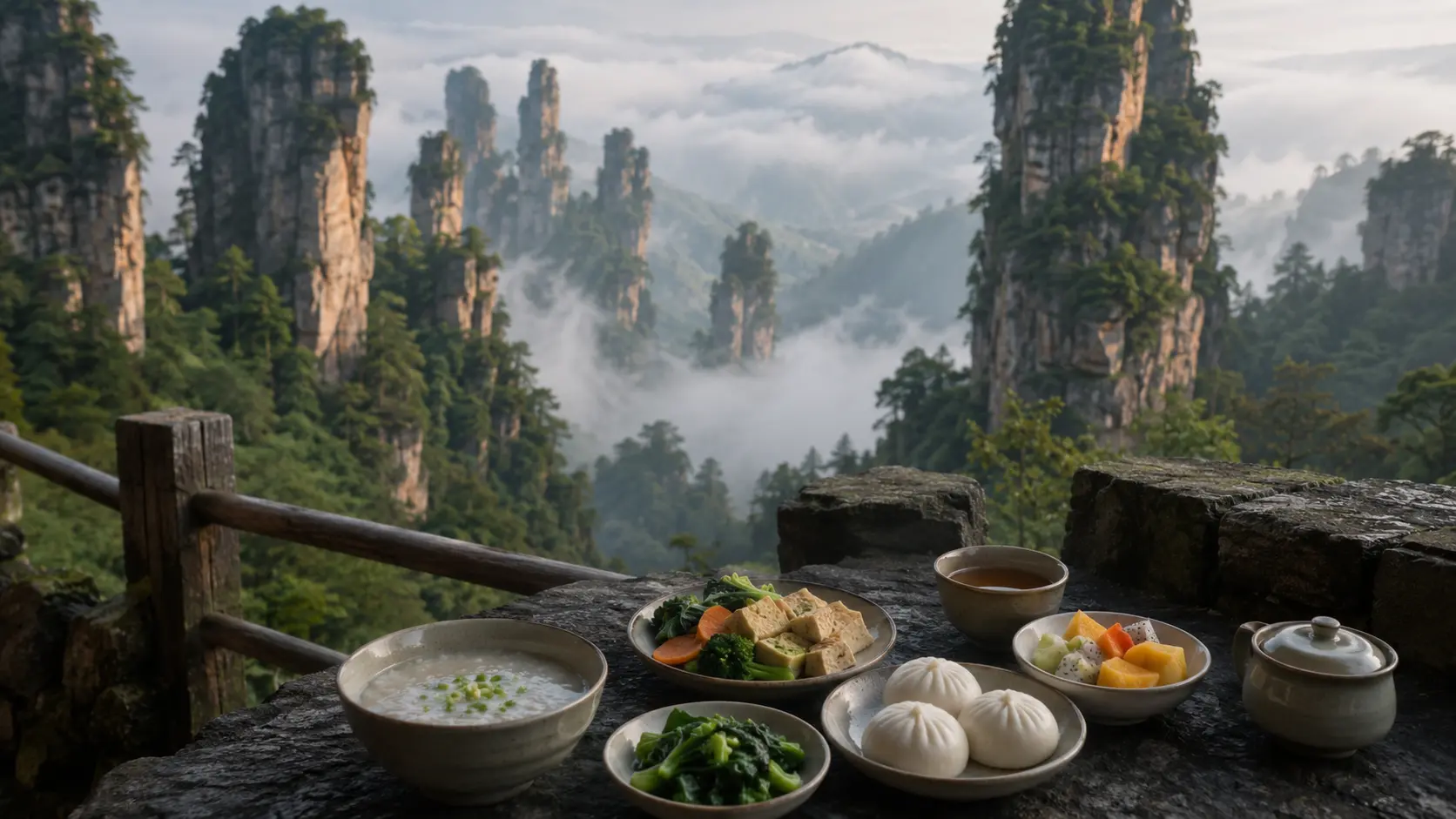
Zhangjiajie
Stay in Wulingyuan for the national park or Yongding for Tianmen Mountain and transport. Hotel evidence is thinner here: current candidates rely mainly on Booking.com meal labels, so written reconfirmation is essential.
Open Zhangjiajie guide →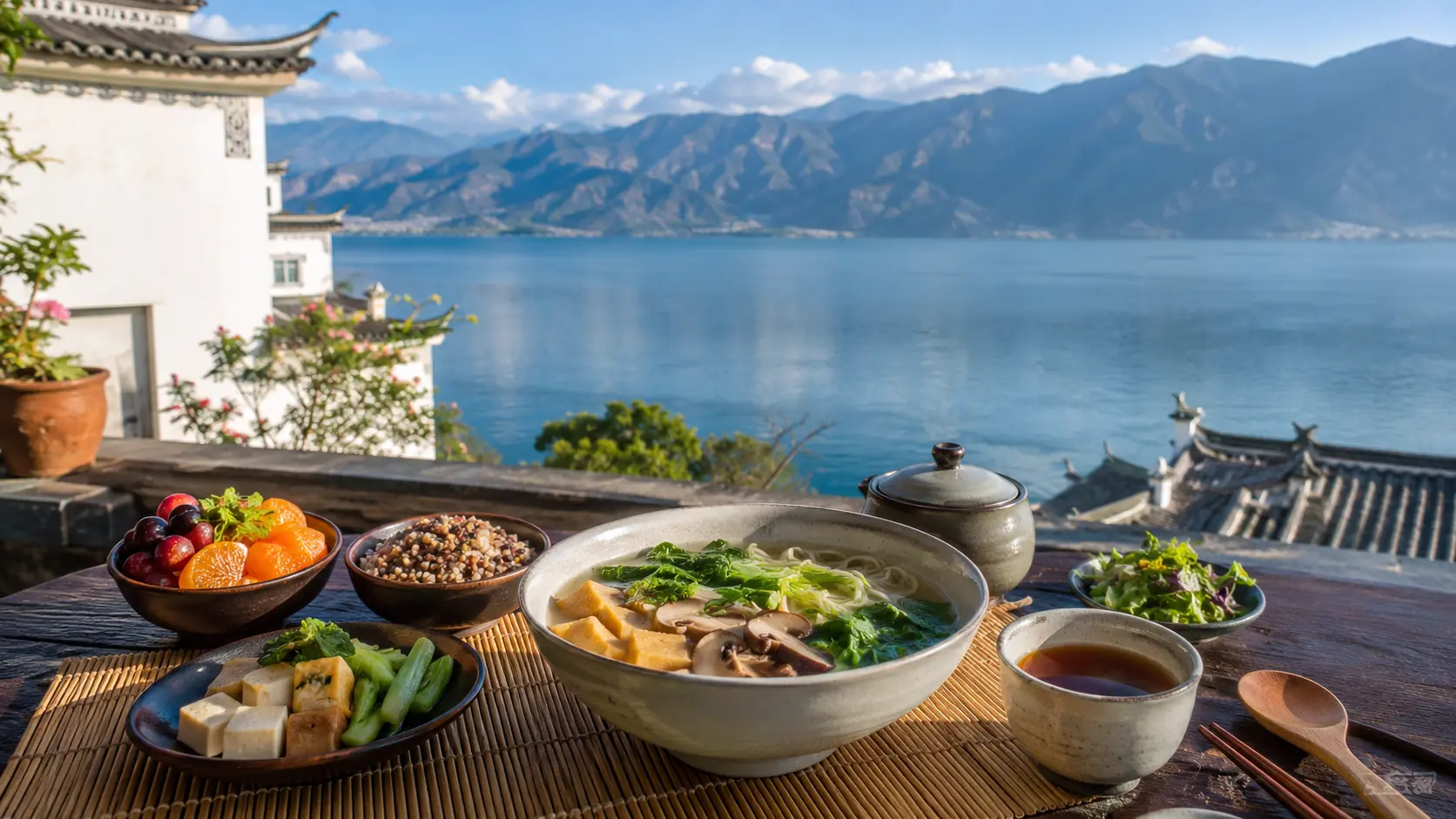
Yunnan
The Yunnan guide is deliberately focused on Dali, Lijiang and Fuxian Lake, with Kunming as a gateway rather than a promise to cover the whole province. It combines specialist stays, heritage and lake or mountain travel.
Open Yunnan guide →At a glance
Compare the nine China guides
“Best evidence” means the strongest type currently available in that destination, not that every listed hotel meets that standard. Open the article for property names, sources, meal periods, booking buttons and caveats.
| Destination | Best for | Suggested base | Best evidence currently expected | Guide |
|---|---|---|---|---|
| Beijing | Imperial history and Great Wall routes | Dongcheng or central Chaoyang | Official menu / listing | Read guide |
| Shanghai | Modern city, Bund and neighbourhoods | Huangpu, Jing’an or Pudong | Official plant-based dining | Read guide |
| Xi’an | City walls and Terracotta Army | Bell Tower or Qujiang | OTA vegan dining labels | Read guide |
| Chengdu | Pandas, teahouses and Sichuan | Taikoo Li or Tianfu Square | Official plant-based restaurant | Read guide |
| Hong Kong | Harbour, food and compact transport | Central, Tsim Sha Tsui or Wan Chai | Official hotel menus | Read guide |
| Hangzhou & Moganshan | West Lake and forest retreat | West Lake plus Moganshan | Specialist retreat | Read guide |
| Guilin & Yangshuo | Li River and karst countryside | Yangshuo, with Guilin gateway | Breakfast / request listings | Read guide |
| Zhangjiajie | Wulingyuan and Tianmen Mountain | Wulingyuan or Yongding | Listing evidence only | Read guide |
| Yunnan | Slow travel, heritage and landscapes | Dali, Lijiang or Fuxian Lake | Specialist stays + menus | Read guide |
Evidence, not assumptions
What the four evidence tiers mean
The tier describes the source and scope of the food claim. It is not a star rating, sustainability score or guarantee against cross-contact.
Fully vegan concept
The operator explicitly describes the accommodation or complete food concept as vegan or plant-based. Confirm that the statement is current and that the chosen rate includes the relevant meals.
Official vegan menu
A mixed hotel publishes a named vegan breakfast, menu or plant-based restaurant on its own website. The guide identifies the exact venue and meal period rather than extending the claim to the whole hotel.
Active booking listing
Booking.com or another major platform currently identifies vegan breakfast or dining. This is useful evidence, but the property should confirm ingredients, timing and availability before a non-refundable booking.
Advance request only
The hotel says dietary needs may be discussed, without publishing a permanent vegan offer. Treat this as a conversation route, not a promised meal, and keep the written reply.
Geography & logistics
Build a China itinerary that works
China’s headline destinations are far apart. High-speed rail is excellent on selected corridors, but a map can hide the real door-to-door time. Choose a coherent route, leave space for hotel communication and avoid turning every day into a transfer.
Classic first trip
Beijing → Xi’an → Shanghai gives imperial landmarks, ancient history and a modern international gateway. It is the most coherent introduction for roughly ten to fourteen days, with Hangzhou as a logical extra from Shanghai if time allows.
Use the Beijing government’s inbound travel overview for destination context, then verify current rail or flight schedules separately. Three or four bases are usually enough.
Food and landscape route
Chengdu → Zhangjiajie → Guilin and Yangshuo combines Sichuan culture with two very different nature regions. It is not a simple short rail hop, so compare realistic flight and rail combinations before reserving hotels.
For Zhangjiajie, decide between Wulingyuan and Yongding before booking. For Guilin, decide whether the city is only an arrival point or whether Yangshuo will be the main countryside base.
Yunnan slow route
Kunming → Dali → Lijiang is a regional journey rather than a quick add-on to eastern China. Fuxian Lake can replace part of that sequence when a quiet waterside stay matters more than collecting cities.
Altitude, transfer time and season vary across the province. The Yunnan guide therefore focuses on a few workable bases and never implies that one hotel represents this vast region.
Best for a first visit
Choose Beijing, Xi’an and Shanghai. They give the clearest contrast and the strongest transport logic, while their larger hotel markets make written dietary communication easier.
Best for specialist stays
Look first at Yunnan and Moganshan, where small retreat-style properties can provide stronger vegan concepts than mainstream city hotels. Direct booking may be necessary.
Best for dramatic scenery
Choose Guilin and Yangshuo for river and karst landscapes, or Zhangjiajie for sandstone pillars. In both areas, prioritise location and confirm meals before arrival.
Write every exclusion
“Vegetarian” does not automatically mean vegan. State no meat, fish, seafood, egg, dairy, honey, lard, animal stock or oyster sauce. A useful Chinese sentence is: 我吃纯素,不吃肉、鱼、海鲜、蛋、奶、蜂蜜、动物油、动物高汤和蚝油。
Match the exact meal
A vegan dinner menu does not prove breakfast, and a breakfast label does not prove that the room rate includes it. Name the date, restaurant and meal when contacting the hotel.
Save the reply offline
Keep the hotel’s Chinese address, dietary response and booking terms available without a connection. Discuss allergies separately because a vegan option may still come from a shared kitchen.
How this collection works
Tourism relevance plus hotel evidence
Beijing and Shanghai are essential international gateways, while Xi’an, Chengdu, Guilin, Hangzhou and Zhangjiajie feature in current reporting from the China Tourism Academy. UNESCO-listed places add a different reason to travel: Beijing’s imperial sites, Xi’an’s mausoleum, Hangzhou’s West Lake, Wulingyuan near Zhangjiajie, Lijiang in Yunnan and the South China Karst around the Guilin region. Popularity alone is not enough, however. A destination receives a separate guide only when useful hotel candidates and a distinct itinerary question justify it.
Zhangjiajie remains the collection’s clearest caution case. Its nature demand is strong, but current hotel claims rely mainly on active OTA meal labels rather than official menus. Yunnan is the opposite kind of challenge: the region contains promising specialist stays, but it is too large for blanket statements. Its guide therefore names specific bases and evidence for each property.
Not every famous Chinese destination needs a separate page at launch. Guangzhou and Shenzhen are major gateways, but their current English vegan-hotel results are dominated by general accommodation, business travel and restaurant content. Hainan and Sanya have substantial resort demand, yet the available property-specific vegan evidence is not strong enough for the same standard as these nine guides. Chongqing is another sensible future candidate, particularly for a Sichuan-oriented route, but it would add more value after a distinct, well-sourced hotel set is verified. These places can remain in wider travel planning without creating thin or repetitive articles.
The same restraint applies inside each guide. A chain-wide sustainability promise does not prove vegan food at one property, and a restaurant elsewhere in the same hotel group is not evidence for the featured stay. Every hotel profile must connect the source to the exact property, venue and meal. Booking links support the site, but commercial availability never replaces dietary verification.
Practical answers
Vegan hotels in China: FAQ
Are there fully vegan hotels in China?
Yes, but specialist vegan accommodation is uncommon and usually smaller than an international hotel. The strongest candidates appear around Yunnan and Moganshan. Confirm the current concept, operating dates, meal plan and booking channel directly before organising a route around one property.
Which Chinese cities are easiest for a first vegan trip?
Beijing, Xi’an and Shanghai form the clearest first route. They combine major sights, broad hotel choice and logical transport. Chengdu is an excellent addition for Sichuan culture and one of the collection’s strongest official plant-based hotel-restaurant examples.
Why is Hong Kong included separately?
Hong Kong is a Special Administrative Region of China and a major tourist destination with strong vegan hotel interest. It is presented as a separate extension because entry rules, currency, payments, transport and some booking arrangements differ from mainland China.
Can these hotels be booked through Booking.com?
Most destination guides prioritise Booking.com affiliate routes when a current property or search result is available. Small fully vegan or retreat-style accommodation may require direct booking. Always compare the room conditions and confirm whether the documented vegan meal is included.
How far ahead should I request vegan meals?
Contact the hotel as soon as the room is booked, ideally at least several days before arrival, and follow any longer deadline stated in the destination guide. Reconfirm shortly before travel and name the exact breakfast, lunch or dinner you require.
Does vegan-friendly mean the whole hotel is vegan?
No. A vegan-friendly hotel may provide one vegan breakfast, a menu in one restaurant or meals only by request while the rest of the property remains conventional. Only an explicit current whole-property statement qualifies for the fully vegan tier.
Is Zhangjiajie strong enough for a separate vegan hotel guide?
Yes for itinerary value, but with a warning. Wulingyuan and Tianmen Mountain create clear travel demand, while several active hotel listings mention vegan meals. Because official menu evidence is limited, every claim must be reconfirmed directly and no property is labelled fully vegan.
Why does the Yunnan guide cover only a few places?
Yunnan is too large and varied for one hotel to represent the whole province. The guide concentrates on Dali, Lijiang and Fuxian Lake, with Kunming mainly as a gateway, so that location advice and plant-based evidence remain specific and useful.
Choose the right China base
Start with a destination guide, verify the exact meal, then book the stay that fits the route.
Destination and hotel evidence checked 31 August 2026. Menus, ingredients, entry rules, transport, prices and availability can change. Booking buttons in the destination guides may be affiliate links.