
Guide
This article covers zinc bisignate intake (zinc bisglycinate): why this form of zinc is often considered well tolerated, when it’s best to take it, and which everyday combinations you may want to avoid.
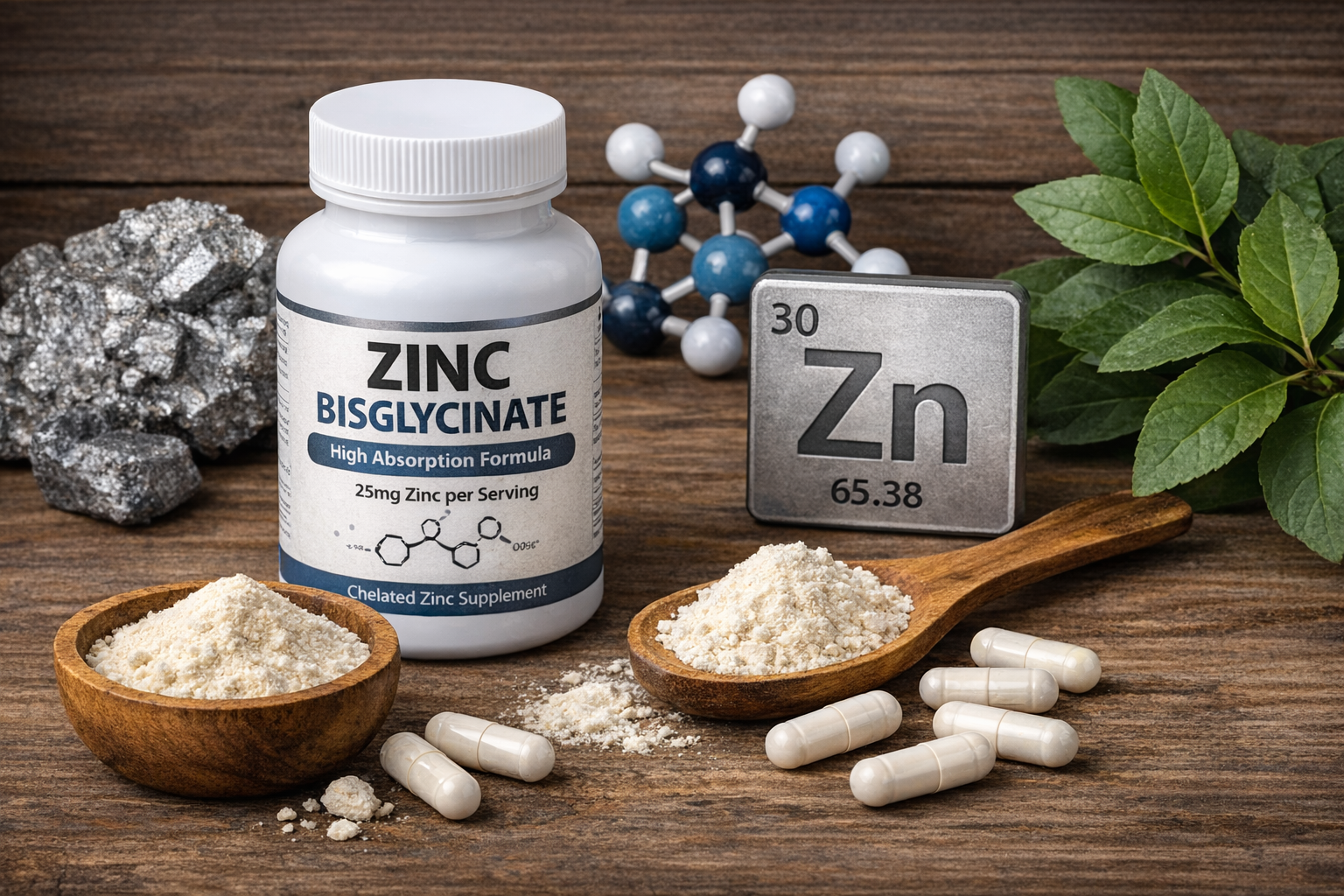
Why is zinc bisignate intake a topic?
In this article, we want to discuss zinc bisglycinate and how to take it. Zinc is a very important nutrient and is often supplemented because it may support the immune system, the skin, and hormonal balance. At the same time, not every zinc supplement is equally good.
Recently, zinc bisglycinate in particular has established itself as one of the better forms. The key question is often not only “which zinc?”, but very specifically: How do you implement zinc bisignate intake correctly, and what should you pay attention to?
Zinc bisglycinate: what’s special about it?
Zinc bisglycinate is a so-called chelate. This means: the zinc atom is bound to two molecules of the amino acid glycine. This binding is one reason why many people consider zinc bisglycinate a high-quality form of zinc.
Compared to other zinc forms, zinc bisglycinate often has the advantage of high bioavailability, good absorption, and it’s frequently “gentler” on the stomach in everyday life. Classic zinc forms such as zinc sulfate or zinc oxide can cause nausea or stomach discomfort for some people, especially on an empty stomach.
In short: zinc bisignate intake is usually about using a well-tolerated zinc form that can be integrated into everyday life without much hassle.
What is zinc good for in the body?
Zinc is involved in many processes in the body. It is most commonly mentioned in connection with:
- Immune system
- Skin, hair, and nails
- Recovery and general bodily processes
- Protein and tissue processes
- Hormonal balance and overall well-being
That’s exactly why zinc is a relevant supplement for many people—especially if dietary intake isn’t always optimal.
Why is zinc bisglycinate considered “gentler” and well absorbed?
For many people, the practical difference shows up mainly in two areas: tolerability and absorption. Zinc bisglycinate is often described as more stomach-friendly than some zinc salts. This can make it more pleasant to take, especially if zinc tends to cause a queasy stomach for you.
In addition, zinc bisglycinate is often chosen when someone wants a zinc form with good absorption without having to dose very high right away.
Important: Even with a well-tolerated form, keep in mind that zinc (like many minerals) can compete with other minerals at higher doses. Over the long term, a sensible routine is usually more important than “more and more.”
Everyday timing: morning, evening, or with food?
Many people are unsure whether they should take zinc bisglycinate in the morning, in the evening, or with food. In general, zinc is often absorbed better when the stomach is relatively “free.” The problem: with conventional zinc forms, taking it on an empty stomach can cause nausea or stomach discomfort for some people.
The advantage of zinc bisglycinate is that these issues tend to occur less often. Therefore, it can be sensible to take it about 30 to 60 minutes before a meal or roughly two hours after eating. That way, the stomach isn’t full anymore, but usually not completely empty either.
If you have a very sensitive stomach, you can also take it directly after a light meal. Absorption is usually still good, and you often manage tolerability better that way.
Practical intake tips
- If you’re sensitive: take it with (or directly after) a light meal.
- If you use multiple minerals: ideally plan zinc at a different time.
- A consistent routine is usually more important than the “perfect timing.”
Morning or evening?
- There’s no strict rule—what matters is what you tolerate well and can do consistently.
- Many prefer the evening because it’s easier to keep distance from mineral-rich meals.
- Some also associate zinc with improved sleep quality.
Remember: zinc bisignate intake works best when you build it into your everyday routine realistically—not when you have to remind yourself anew every day.
Common mistakes & combos you should avoid
Even if zinc bisglycinate is high quality, certain “opponents” can make absorption more difficult. If you want to get the most out of your intake, the following combinations are usually less ideal in everyday life:
Coffee and tea around the time you take it
Coffee and tea contain tannins that can bind minerals. That’s why it’s often a good idea to take zinc with some distance from coffee or tea—roughly speaking: at least one hour after (or before).
Grains, muesli, bread & phytate-rich meals
Whole grains, grains in general, and legumes contain phytic acid (phytates). This can bind zinc and reduce absorption. So taking zinc directly with a muesli or bread-based meal is usually not ideal.
High doses of calcium, iron, or magnesium
High amounts of calcium, iron, or magnesium can also inhibit zinc absorption. A gap of around two hours is often a good everyday solution.
What may support absorption
There are also combinations many people find practical: vitamin C is often mentioned in the context of mineral absorption. Therefore, taking it together with a vitamin-C-containing drink (for example juice) or as part of a suitable supplement may be sensible if you tolerate it well.
Everyday tip: If you’re unsure, start simple. A clear routine (with some distance from coffee and from other minerals) usually helps zinc bisignate intake more than complicated rules.
Overview table: what matters for intake
| Topic | What does that mean in practice? | Practical tip |
|---|---|---|
| Empty stomach vs. with food | On an empty stomach often better absorption, but not everyone tolerates it. | Try 30–60 minutes before eating or about 2 hours after a meal. |
| Sensitive stomach | Some people react to zinc on an empty stomach with nausea. | If needed, take it right after a light meal. |
| Coffee & tea | Tannins can bind minerals. | Plan at least 1 hour of spacing. |
| Whole grains, muesli, legumes | Phytates can bind zinc and reduce absorption. | Don’t combine it directly with very phytate-rich meals. |
| Calcium, iron, magnesium | High doses can compete. | If possible, keep 2 hours apart. |
| Vitamin C | Often mentioned as supportive in the context of mineral absorption. | If well tolerated, combine with a vitamin-C-containing drink. |
| Dosage | Individual needs are decisive. | Many people aim for about 15–20 mg per day (total), depending on the situation. |
| Long-term high doses | Very high amounts over months are usually not advisable. | High-dose (e.g., 50 mg) should usually be short-term or discussed with a doctor. |
| Keep copper in mind | Zinc can affect copper absorption. | With longer-term, higher intake, consider the overall situation (diet/status). |
FAQ
Should I take zinc bisglycinate on an empty stomach?
Zinc is often absorbed better when the stomach is relatively empty. However, if you tend to experience nausea or stomach problems, taking it after a light meal is often the better (and more realistic) solution.
Morning or evening—what’s better?
There’s no exact rule. Many take it in the evening because spacing from coffee and mineral-rich meals is often easier then. Ultimately, what matters most is that you tolerate it well and take it regularly.
What should I avoid combining zinc with?
Taking it directly together with coffee/tea, very phytate-rich meals (e.g., muesli/whole grains right at intake), or high-dose calcium, iron, or magnesium is often unfavorable. A time gap is usually better.
How high should the dosage be?
That depends on your individual needs and diet. Many people aim for about 15–20 mg per day in total. High doses (for example 50 mg) are usually intended for short phases or after consulting a doctor.
Can you take too much zinc?
Yes—persistently very high amounts are not advisable and can, among other things, affect the interplay with copper. If you supplement long term, it makes sense to keep the overall situation in mind.
Conclusion
In summary: zinc bisglycinate is a very practical and comfortable way to support zinc status, because it is often well tolerated and has good absorption.
Zinc bisignate intake tends to work best in everyday life if you stick to a simple routine, keep some distance from coffee/tea and other high-dose minerals, and don’t combine it directly with phytate-rich meals.
And if you want to implement it in the most sensible way for you: many prefer taking it in the evening, partly because spacing from calcium-rich meals is often easier then. What matters most, however, is that you tolerate it well and can take it consistently.
Note: This article does not replace medical advice. If you have symptoms, are pregnant, breastfeeding, taking medication, or have pre-existing conditions: please have your status/blood values checked by a doctor and get individual advice. Dietary supplements are not a substitute for a balanced diet.
Supplements
More supplement guides

Zinc bisglycinate intake: when to take it and what to look out for?
Guide This article covers zinc bisignate intake (zinc bisglycinate): why this form of zinc is often…
Read more
What is zinc bisglycinate?
Zinc Bisglycinate – What is it and what is it good for? Guide Zinc bisglycinate is…
Read more